


For many academic professionals across the continent, the dream of collaborating with world-class U.S. institutions is often sidelined by the complexities of securing financial aid and international study support.
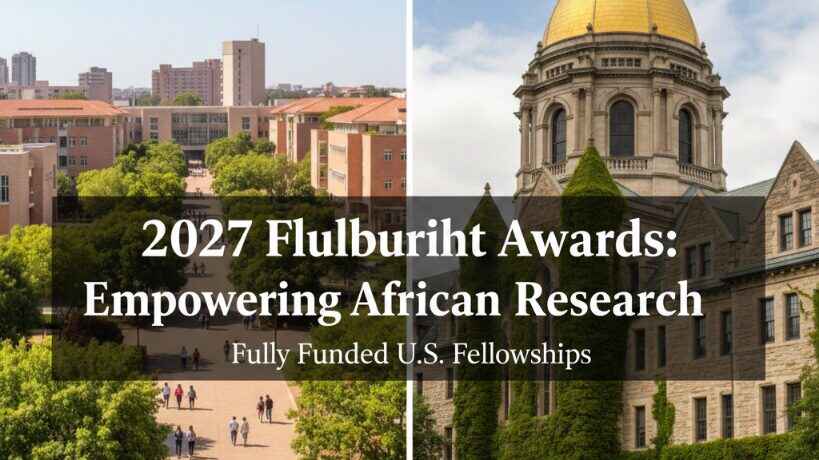
However, the window has officially opened for one of the most prestigious global scholarships available today. The 2027 Fulbright Research Awards for African Scholars are now accepting applications, offering a career-defining bridge between African ingenuity and American academic resources.
This isn’t just a typical grant; it is a strategic investment in the intellectual capital of Africa. By the 2027–2028 academic year, selected faculty and researchers will find themselves at the heart of leading U.S. institutions.
The “big picture” here is clear: the program aims to “strengthen academic collaboration, research excellence, and institutional development by enabling scholars to gain exposure to U.S. academic environments and return home with enhanced teaching, research, and leadership capacity.”
Two Paths to Professional Advancement
The Fulbright Program understands that institutional growth requires both raw research and structured educational frameworks. To address this, the 2027 cycle offers two distinct pathways for applicants:
- Research Grants: Tailored specifically for postdoctoral research projects. These allow seasoned scholars to dive deep into specialized fields, utilizing U.S. facilities that might be unavailable at their home institutions.
- Program and Curriculum Development Grants: These are unique opportunities for professionals “seeking to develop new courses, curricula, or academic programs for implementation at their home institutions.”
A particularly exciting addition to this year’s cycle is the Notre Dame Visiting Scholar Award. Applicants who express interest in this pathway could find themselves hosted by the University of Notre Dame.
The focus areas for this specific collaboration include critical global sectors such as “sustainability and resilience, peacebuilding and conflict resolution, and global health fields such as WASH, nutrition, and maternal health.”
Eligibility: Who Can Apply?
To maintain the high standards of this international study fellowship, the Fulbright Foreign Scholarship Board has outlined specific criteria. To be considered, you must be a university faculty member, administrator, or research institute professional.
Academic Requirements:
- For Research Grants: You must “hold a PhD and demonstrate a strong scholarly record.”
- For Curriculum Development: You must “hold at least a master’s degree or equivalent.”
Key Preferences and Constraints:
- Experience: Preference is given to those with “at least three years of university teaching experience.”
- Originality: Your project statement must include a “bibliography of references related to the proposed project.”
- Restrictions: Proposals involving “clinical medical research with patient contact are not eligible.” Additionally, those seeking dissertation research or immediate postdoctoral study right after a PhD are excluded.
Step-by-Step: The Application Roadmap
Securing fully funded international scholarships requires precision. Follow this professional checklist to ensure your application stands out:
- Select Your Category: Decide between the Research Grant or the Curriculum Development Grant. If you want to be considered for the Notre Dame placement, make sure to indicate this clearly.
- Craft Your Proposal: Your project statement is the heart of your application. You must “clearly explain objectives, relevance to your professional role, and why the research needs to be conducted in the United States.”
- Secure a Host (Optional but Recommended): While a letter of support from a U.S. host institution is “recommended but not mandatory,” having one significantly bolsters your “Helpful Content” score with the selection committee.
- Submit Digitally: Use the official Fulbright portal before the April 10, 2026 cutoff. Note that “plagiarism will result in disqualification,” so ensure every word of your narrative is your own.
- Uganda: https://ug.usembassy.gov/2027-fulbright-research-awards-for-african-scholars/
- All African Regions: https://us.fulbrightonline.org/countries/sub-saharan-africa
- Research Grants Africa: https://fulbrightscholars.org/award/africa-regional-research-program-7
- Angola and São Tomé and Príncipe: https://ao.usembassy.gov/education/educational-exchanges/the-fulbright-visiting-scholar-program/
- Zimbabwe: https://zw.usembassy.gov/fulbright-program/
- Benin West Africa: https://bj.usembassy.gov/fulbright-african-research-scholar-program-arsp/
Also Read: Fulbright SUSI Scholarship 2026: Fully Funded US Opportunity for Educators
Related: Fulbright Specialist Scholarship Program 2026: Fast-Track International Exchange
Frequently Asked Questions (FAQ)
Can I apply if I have recently visited the U.S.?
The program gives “preference to applicants who have not visited the United States within the past five years.” While not an outright ban, new visitors are prioritized.
Is English proficiency required?
Yes. All candidates “must demonstrate strong English language proficiency” to effectively engage with their U.S. peers and host institutions.
What does the funding cover?
It is a “comprehensive funding package covering travel, research stay support, and academic engagement.”