
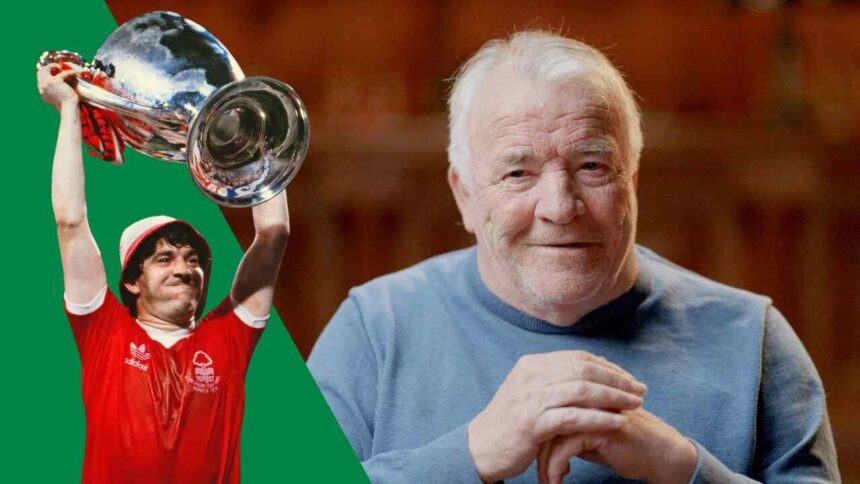
Nottingham Forest is mourning the loss of one of its greatest icons, John Robertson, after the club confirmed on Thursday that the decorated winger has died at the age of 72. The Scottish football great was central to the club’s most successful era, helping to cement its place in European football history.
Forest announced the news in a deeply emotional statement, saying: “We are heartbroken to announce the passing of Nottingham Forest legend and dear friend, John Robertson.” The club added: “A true great of our club and a double European Cup winner, John’s unrivalled talent, humility and unwavering devotion to Nottingham Forest will never ever be forgotten.”
Robertson was a key figure under legendary manager Brian Clough, who famously described him as “a Picasso of our game” and later reflected that he transformed from a “scruffy, unfit, uninterested waste of time” into “one of the finest deliverers of a football I have ever seen”. Known for his trademark cultured left foot and world-class crossing ability, his influence played a pivotal role in some of the sport’s biggest moments.
During his illustrious career, Robertson produced unforgettable performances, including assisting Trevor Francis’s winner in the 1979 European Cup final against Malmo. Just a year later, he cemented his name in European football history by scoring in the 1980 final, sealing victory over Hamburg.
Robertson made over 500 appearances across two spells at Nottingham Forest, where he became a cornerstone of the club’s rise from the second division to lifting the English first division title in 1978. His achievements extended beyond club football — earning 28 caps for Scotland and delivering a memorable winning goal against England in 1981.
After hanging up his boots, Robertson transitioned into coaching, serving as assistant manager alongside his former Forest teammate Martin O’Neill at several major football clubs, including Aston Villa. His commitment to football, his team, and his mentorship continued shaping the sport long after his playing days.
His passing marks the end of an era in English and Scottish football, remembered by both fans and players who witnessed his greatness. Nottingham Forest supporters will forever associate his legacy with the club’s highest moments — European glory, historic victories, and a career defined by humility, loyalty, and genius.