

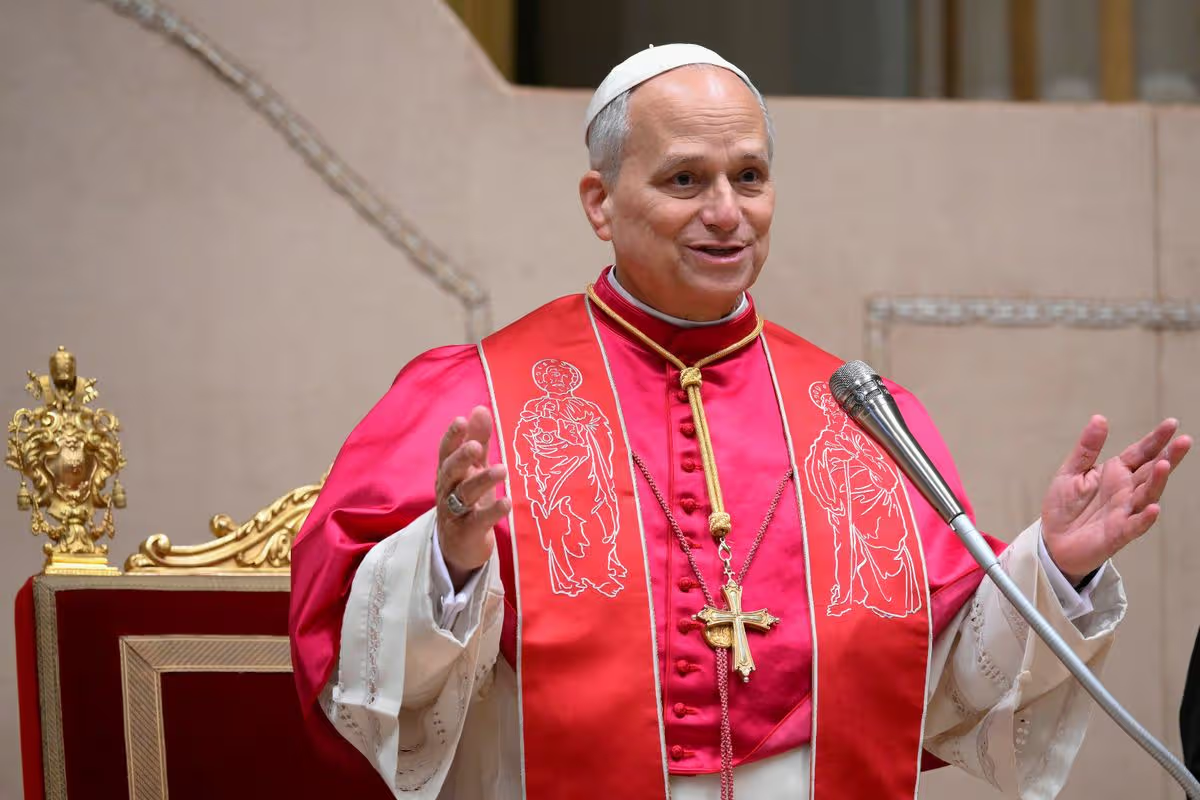
Pope Leo XIV has issued a sharp warning to Catholic clergy about relying on artificial intelligence to prepare sermons, arguing that technology cannot replicate the lived experience of faith or authentic spiritual guidance.
Speaking during a private meeting later published by Vatican News, the Chicago-born pontiff urged priests to resist outsourcing one of their most sacred duties to generative AI tools.
“To give a true homily is to share faith,” Pope Leo XIV said, adding that artificial intelligence “will never be able to share faith.”
His remarks come at a time when AI writing tools are increasingly being adopted across industries — including religious institutions — for drafting speeches, reflections, and public communications. The Pope made clear that while technology has its place, sermon preparation requires personal reflection and intellectual engagement.
He cautioned clergy against “the temptation to prepare homilies with Artificial Intelligence.” Adding, “Like all the muscles in the body, if we do not use them, if we do not move them, they die. The brain needs to be used, so our intelligence must also be exercised a little so as not to lose this capacity,” Leo said in the closed-door meeting.
Beyond artificial intelligence, the pontiff also criticized what he described as digital distraction and validation culture among clergy, warning that seeking “illusion on the internet, on TikTok” cannot substitute for genuine pastoral connection with congregants.
The warning is notable given that the Vatican itself is experimenting with AI technology. The Holy See recently introduced a real-time translation system powered by artificial intelligence at St. Peter’s Basilica, capable of translating liturgical celebrations into up to 60 languages. The move reflects the Catholic Church’s attempt to balance technological innovation with theological integrity.
Still, Pope Leo emphasized that intellectual discipline and continuous learning remain central to priestly life. “Study in our life must be permanent, continuous. When I hear someone tell me—this is true, a priest told me this—‘I have not opened a book since I left the seminary.’ My goodness, I thought, how sad!” the Pope stressed.
The comments follow his recent observance of Ash Wednesday, where he formally opened the Church’s Lenten season. During the service, he reflected on the moral and geopolitical turmoil shaping the modern world, lamenting the “ashes of international law and justice” left behind by ongoing wars.
In his homily marking the beginning of Lent, the 40-day period of fasting and repentance leading to Easter, Leo delivered a somber meditation on global instability.
“This is also reflected in the ashes of international law and justice among peoples, the ashes of entire ecosystems and harmony among peoples, the ashes of critical thinking and ancient local wisdom, the ashes of that sense of the sacred that dwells in every creature,” he said.
The renewed focus on spiritual authenticity comes as faith institutions worldwide grapple with the rise of artificial intelligence, digital communication platforms, and shifting patterns of religious engagement. Pope Leo’s message signals that while innovation may support church operations, the essence of ministry, preaching, study, and pastoral care must remain distinctly human.
Read More: Vatican Rejects Trump’s ‘Board of Peace’ Initiative
