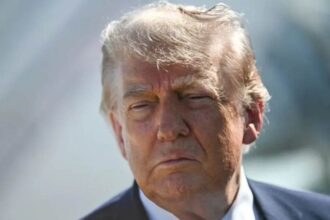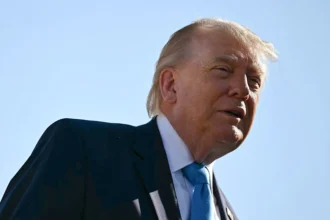

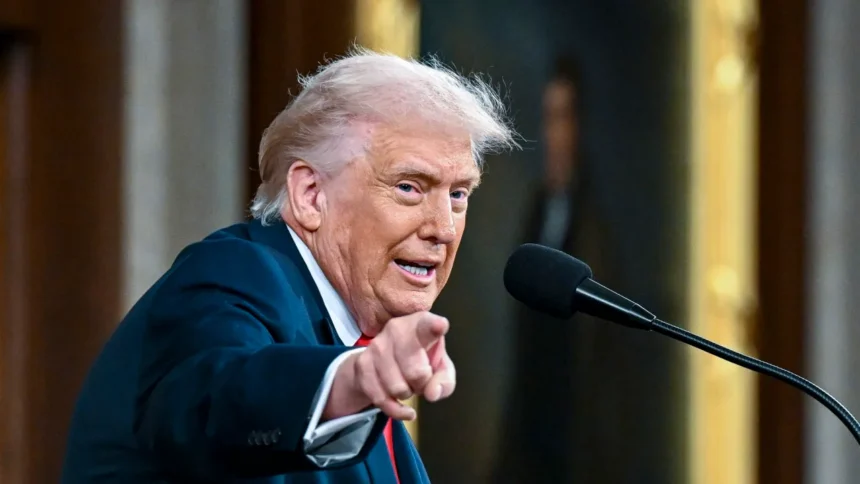
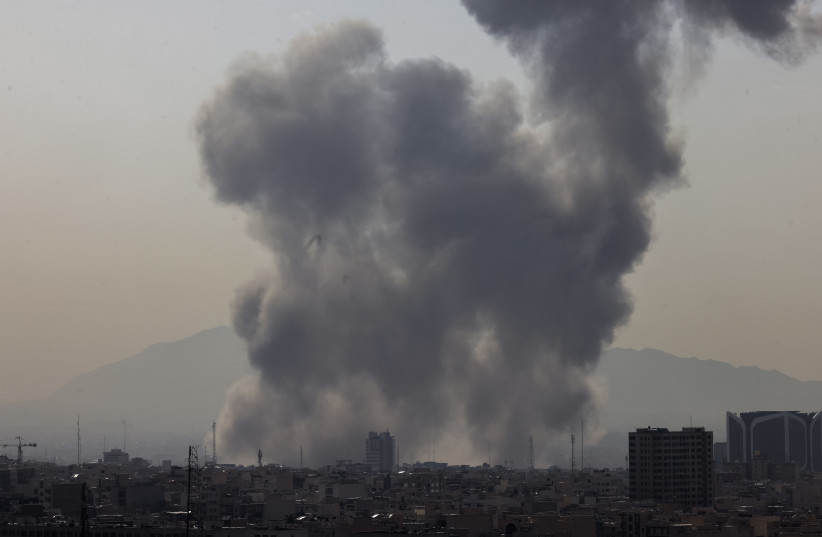
President Trump signaled Saturday that the ongoing Iran bombing campaign could continue for at least a week — and potentially longer — as U.S. and Israeli forces escalate military operations targeting Iranian strategic assets.
In a statement posted on Truth Social, Trump declared that airstrikes would persist “uninterrupted” to achieve what he described as regional stability.
“The heavy and pinpoint bombing, however, will continue, uninterrupted throughout the week or, as long as necessary to achieve our objective of PEACE THROUGHOUT THE MIDDLE EAST AND, INDEED, THE WORLD!” Trump wrote.
The strikes, carried out jointly by the United States and Israel under the name “Operation Epic Fury,” began at 1:15 a.m. EST. According to U.S. military officials, the coordinated air assault targeted Islamic Revolutionary Guard Corps (IRGC) command and control facilities, ballistic missile and drone launch sites, military airfields, and Iranian air defense systems.
The Pentagon confirmed that U.S. Central Command (Centcom) is assessing the full scope of operational impact.
Iranian authorities reported heavy casualties. The Iranian Red Crescent told state media that more than 200 people were killed and nearly 750 were injured. Centcom said it is reviewing reports that strikes may have hit a girls’ school in southern Iran. Iranian officials claim more than 80 students were killed in that incident.
Later Saturday, Trump announced that Iran’s supreme leader Ayatollah Ali Khamenei had been killed, bringing an end to his 36-year rule. The statement followed remarks from Israeli Prime Minister Benjamin Netanyahu, who also said Khamenei was dead.
“This is the single greatest chance for the Iranian people to take back their Country,” Trump said in the same Truth Social post. “We are hearing that many of their IRGC, Military, and other Security and Police Forces, no longer want to fight, and are looking for Immunity from us.”
He added that this “process should soon be starting,” and reiterated in an overnight video message that Iranians now have “a president who is giving you what you want.”
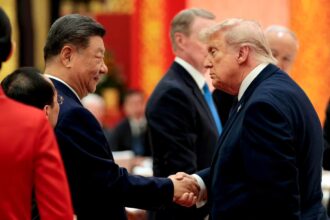
The military escalation comes after diplomatic negotiations between U.S. and Iranian officials stalled over Tehran’s nuclear program. Washington has long opposed Iran’s development of nuclear weapons, a goal Iranian leaders have consistently denied pursuing. Lawmakers from both parties have maintained that Iran must not obtain a nuclear weapon, a stance that has shaped U.S. foreign policy and national security strategy for years.
Reaction on Capitol Hill split sharply along partisan lines. Several Democratic lawmakers called for a House vote on a war powers resolution, arguing Congress should formally authorize continued military action. Republicans, meanwhile, praised Trump’s decision to authorize the strikes, describing the operation as decisive leadership in the face of national security threats.
Former Vice President Kamala Harris criticized the action, distancing herself from what she characterized as a broader push for regime change.
“What we are witnessing is not strength,” she wrote on the social platform X. “It is recklessness dressed up as resolve. I know the threat that Iran poses, and they must never be allowed to have a nuclear weapon, but this is not the way to dismantle that threat.”
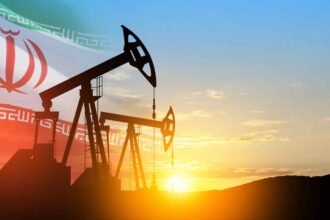
The coming days may determine whether the conflict remains a limited military operation or expands into a prolonged regional confrontation. Defense analysts note that sustained air campaigns in the Middle East carry significant geopolitical and economic consequences, including oil market volatility and increased security risks for U.S. personnel abroad.
For now, the White House has indicated the operation will continue until its stated objectives are met.