
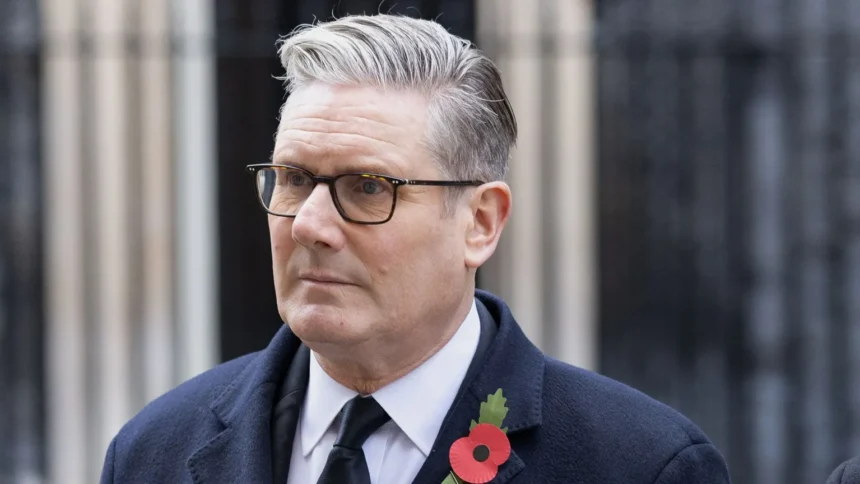
British Prime Minister Keir Starmer has openly criticized Donald Trump and Vladimir Putin, blaming their global actions for the sharp and unpredictable rise in UK energy bills. His remarks come as households and businesses continue to feel the pressure of fluctuating costs tied to international conflicts.
Speaking during an appearance on Talking Politics podcast, Starmer expressed frustration with the repeated spikes in energy prices. “I’m fed up with the fact that families across the country see their bills go up and down on energy, businesses’ bills go up and down on energy, because of the actions of Putin or Trump across the world,” he said.
The comments arrive at a time when oil markets remain unstable. Prices recently surged during tensions linked to the U.S.-Israeli war with Iran, before easing slightly following a fragile ceasefire agreement that has yet to fully restore market confidence.
Energy volatility has been a persistent issue since Russia launched its invasion of Ukraine in February 2022. The conflict triggered widespread disruption across global supply chains, driving inflation and pushing fuel and electricity prices higher in many countries, including the UK.
From Washington, officials pushed back against criticism of the U.S. president. White House spokesperson Anna Kelly defended Trump’s foreign policy stance, particularly regarding Iran.
“Many world leaders have spent decades talking about the threat posed by Iran, but doing nothing about it,” she said by email. “President Trump took courageous action to ensure Iran can never possess a nuclear weapon, and as he said, we are far along with a definitive agreement to deliver lasting peace.”
Starmer also turned his attention to developments in the Middle East, criticizing Israel’s military actions during the ceasefire period. He said Israel was “wrong” to carry out deadly strikes on Lebanon, a move that has further complicated diplomatic efforts.
Iran, meanwhile, has accused the United States of breaching ceasefire terms. Officials in Tehran pointed to the Lebanon strikes as evidence that agreements are not being fully respected, raising concerns about the stability of the truce.
Read More: Trump Pressures NATO Allies to Secure Hormuz as Oil Route Crisis Deepens