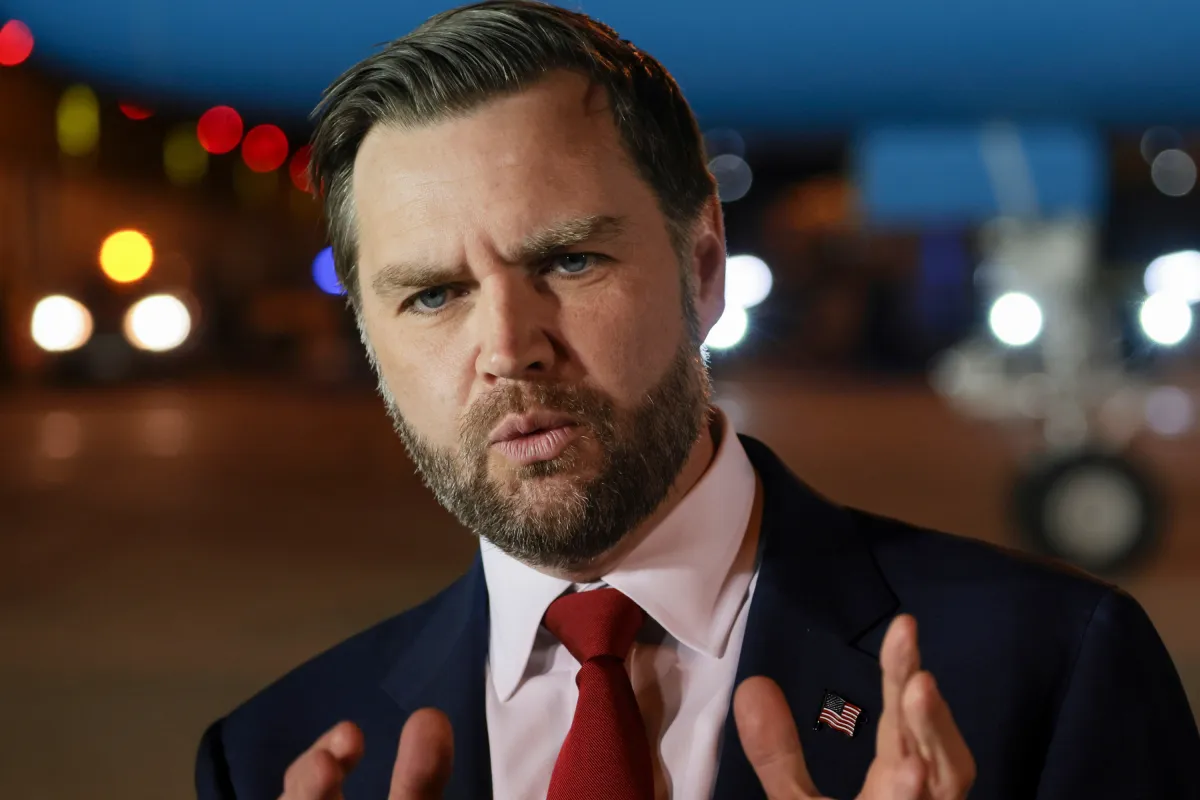

Vice President JD Vance is facing a steep drop in public support, with new polling data placing him at the lowest approval level ever recorded for a vice president at this stage in office.
The numbers, analyzed by Harry Enten on CNN, show a rapid shift in how Americans view the administration. What began as a modestly positive start has now turned into a sharp decline, reflecting broader dissatisfaction with the current political climate.
According to Enten’s polling average, Vance’s net approval rating has fallen from +3 to -18 since taking office in January 2025. That 21-point drop puts him behind every modern vice president measured at a similar point in their tenure.
Comparisons with past leaders highlight just how steep the fall has been. Kamala Harris recorded a net rating of -13 at a similar stage. Mike Pence stood at -7. Joe Biden, during his time as vice president, held a +4 rating, while Dick Cheney reached a much stronger +37.
Enten did not hold back in his assessment. He described Vance’s current position as “historically the worst” among his peers. While he acknowledged that vice presidents have generally become less popular over time, he made it clear that this trend alone does not explain the scale of Vance’s decline.
“JD Vance is not doing too hot to trot at this point,” Enten said during the broadcast, pointing out that the drop came after an initially stable start.
The analyst also suggested that the vice president’s struggles are tied closely to the performance of the broader administration. According to him, Vance appears to be “dragged down along with the president of the United States,” as public opinion shifts against the White House.
The fall in approval reflects more than just personal perception. It signals wider political pressure, with voters reacting to policy decisions, economic conditions, and the overall direction of leadership.
Attention now turns to what comes next. Political analysts expect future polling to reveal whether this is a temporary slump or the beginning of a deeper trend. Much will depend on how the administration responds to ongoing challenges and how voters react in the lead-up to the next election cycle.