

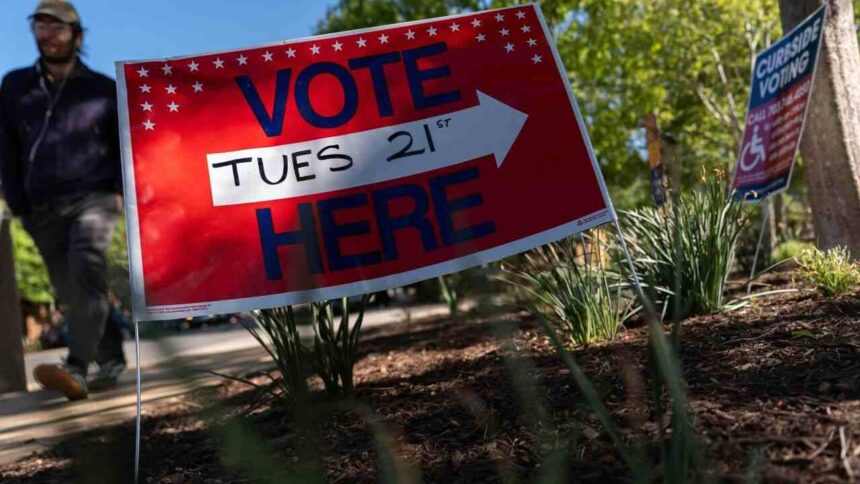
Voters in Virginia have approved a high-stakes redistricting measure that could reshape control of the United States House of Representatives in the 2026 midterm elections. The decision positions Democrats to gain several seats in a chamber where margins remain tight.
The newly approved map is expected to favor Democratic candidates in as many as four Republican-held districts. If those projections hold, the shift could play a decisive role in determining which party controls Congress after November’s vote.
The move reflects a broader national battle over electoral maps. That conflict intensified after Donald Trump encouraged conservative-led states to revisit district boundaries in an effort to protect the Republican majority. Since then, multiple states have entered what analysts describe as a redistricting “arms race.”
Control of Congress often shifts during midterm elections, especially against the party of the sitting president. A Democratic gain in the House would not only challenge Trump’s legislative agenda but could also lead to increased congressional investigations led by Democrats.
Under U.S. law, gerrymandering—the redrawing of districts to benefit a political party—is legal unless it discriminates based on race. This legal framework has allowed both major parties to aggressively redraw maps when opportunities arise.
Before the new plan, Democrats held six of Virginia’s 11 congressional seats. The revised map could increase that number to as many as 10, dramatically strengthening their position.
“Virginia just changed the trajectory of the 2026 midterms,” Democratic state House Speaker Don Scott said on social media.
“At a moment when Trump and his allies are trying to lock in power before voters have a say, Virginians stepped up and leveled the playing field for the entire country,” he wrote.
The referendum drew record-breaking financial attention. According to the Virginia Public Access Project, more than $80 million was raised by advocacy groups on both sides, making it the most expensive ballot measure in the state’s history.
Trump reacted sharply to the outcome. Speaking publicly, he warned of broader consequences if Democrats gain control of the House.
“I don’t know if you know what gerrymandering is, but it’s not good,” he said, adding that a Democratic majority “it’s going to be a disaster”.
Virginia’s decision comes amid similar moves across the country. Texas led the mid-decade redistricting push, adopting new maps that could give Republicans an advantage in five additional seats. In response, California moved to redraw its own districts.
Governor Gavin Newsom framed the effort as a direct countermeasure, saying the state needed to “fight fire with fire.” Voters later approved a revised map that may benefit Democrats in five districts.
Other Republican-led states, including North Carolina and Missouri, have also adjusted their maps to favor GOP candidates. Meanwhile, Utah adopted court-influenced districts that could give Democrats an edge in at least one race.