

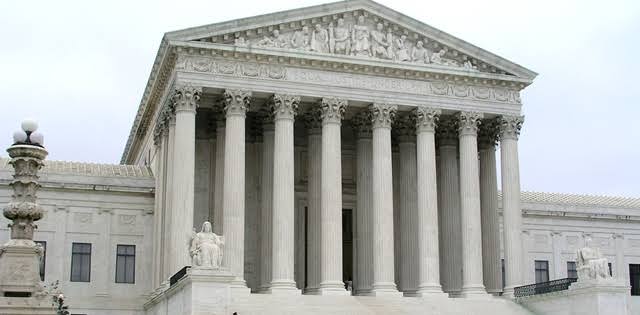
The U.S. Supreme CourtSupreme Court has refused to take up a high-profile legal challenge from Florida parents who argued that a public school violated their constitutional rights by supporting their child’s gender identity without informing them.
The decision leaves intact a lower court ruling that dismissed the lawsuit, marking another instance where the nation’s highest court has declined to intervene in disputes over how schools handle gender identity issues.
At the center of the case is a middle school in Tallahassee, where parents January and Jeffrey Littlejohn claimed school officials treated their child as nonbinary and withheld that information from them. The parents argued this action violated their rights under the Constitution’s due process clause, which protects a parent’s authority over their child’s upbringing.
Lower courts disagreed. The 11th U.S. Circuit Court of Appeals ruled that the school’s actions did not meet the legal threshold required to prove a constitutional violation. Judges emphasized that officials did not coerce the student or act with harmful intent.
“And perhaps most importantly, defendants did not act with intent to injure. To the contrary, they sought to help the child,” the appeals court wrote.
The dispute reflects a growing national divide over how schools balance student privacy with parental rights. Policies designed to protect transgender and gender non-conforming students often advise educators to seek a child’s consent before sharing sensitive information with parents, especially in cases where disclosure could pose risks.
The Florida school district followed such guidance. Its policy, first introduced in 2018, aimed to safeguard students who might face harm if their gender identity were revealed without permission. The guidance has since changed after Florida passed a 2021 law strengthening parental rights. Schools must now inform parents unless there is a reasonable belief that disclosure could lead to abuse, neglect, or abandonment.
The Supreme Court’s decision comes as it continues to face a wave of cases tied to transgender rights. In recent months, the court has taken steps that signal a complex and evolving legal stance.
In one instance, the court blocked certain California measures that limited what schools could share with parents, suggesting those policies might infringe on constitutional protections. In another major ruling in 2025, the justices upheld a Tennessee law banning gender-affirming medical care for minors.
These cases unfold alongside broader efforts by President Donald Trump and several Republican-led states to restrict aspects of transgender rights, including participation in sports and access to healthcare.
Legal battles over these issues are now playing out across multiple states. Similar challenges have already been turned away by the Supreme Court in Wisconsin, Maryland, and Massachusetts, signaling a pattern of reluctance to directly address the core constitutional questions—at least for now.
For families, schools, and policymakers, the lack of a definitive ruling means the debate is far from settled. Courts continue to weigh two competing concerns: the rights of parents to guide their children’s lives, and the need to protect students navigating sensitive questions about identity.