
A heated exchange in Washington has exposed growing concern over the financial toll of the Iran war, as top officials struggle to defend rising costs tied to fuel, food, and military spending.
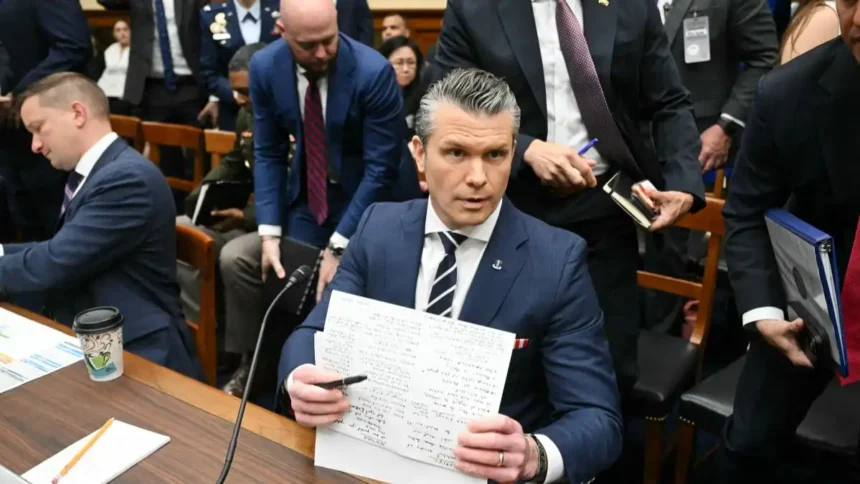
During a House Armed Services Committee hearing, Defense Secretary Pete Hegseth faced sharp criticism from Representative Ro Khanna, who challenged the Pentagon’s estimate that the war has cost $25 billion so far. Khanna argued the real economic burden on Americans could be far higher, reaching as much as $631 billion, or roughly $5,000 per household.
“Do you know how much it will cost Americans in terms of their increased cost in gas and food over the next year because of Iran?” Khanna asked.
Hegseth dismissed the line of questioning as a political trap. “What would you pay to ensure Iran does not get a nuclear bomb?” he replied, reframing the debate as a matter of national security.
Khanna pressed on. “Will you acknowledge that there is an economic cost to the American people for doing what you believe is necessary to make Iran denuclear?”
Hegseth pointed to internal economic management, stating, “We have an incredible economic team that’s managing this better than what the previous administration,” before being interrupted.
“You don’t know what we paid in terms of the missiles that hit the Iranian school. You don’t know what we’re paying in terms of gas. You don’t know what we’re paying in terms of food. Your $25 billion number is totally off,” Khanna said.
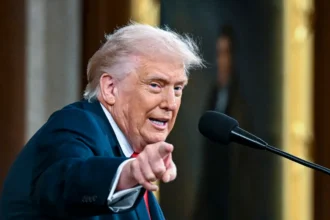
The economic strain is already visible. Iran’s control over the Strait of Hormuz has disrupted global oil flows, pushing average U.S. gas prices to about $4.18 per gallon—the highest level since the conflict began. The spike has added pressure on Donald Trump, whose approval ratings have dropped amid broader concerns over the cost of living.
Khanna also challenged the administration’s handling of Iran’s nuclear program. He pointed out that Iran’s stockpile of enriched uranium has grown since the U.S. withdrew from the Joint Comprehensive Plan of Action.
“Do you know how much the enriched uranium was after you ripped up the JCPOA?” Khanna asked. Hegseth did not answer directly, instead shifting focus to California’s high gas prices and blaming Democratic policies.
The exchange took a political turn as Khanna accused the administration of breaking campaign promises. “You know what? I’m sad. I’m sad for all the people who voted for Trump, I’m sad for them, because you betrayed them. You betrayed a lot of that MAGA base,” Khanna said. “And you know, who knows that? JD Vance knows that.”
Reports from The Atlantic and The New York Times suggest Vance has privately questioned whether the Pentagon has fully disclosed the war’s costs and damage. He is described as one of the more skeptical voices within Trump’s Cabinet.
Public opinion reflects the tension. A recent poll by The Associated Press and NORC at the University of Chicago found that 76 percent of Americans disapprove of Trump’s handling of the cost of living, including nearly half of Republicans. On the Iran war itself, 67 percent expressed disapproval.
Despite the backlash, the administration continues to pursue a strategy aimed at weakening Iran’s economy. Officials believe restricting Iran’s energy exports could force the government into negotiations, even as the financial impact at home grows.