
A major legal fight over abortion access has landed back at the U.S. Supreme Court after Louisiana urged the justices to keep restrictions on mailing abortion pills nationwide.
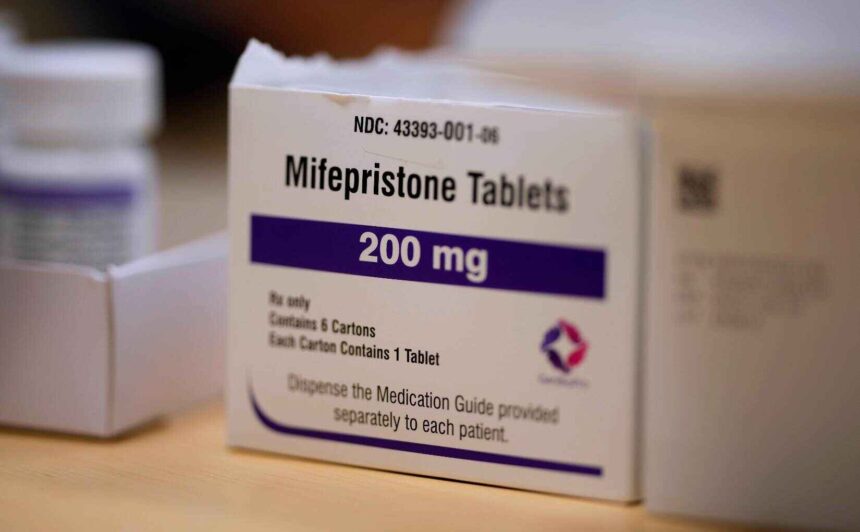
At the center of the dispute is mifepristone, one of the two drugs commonly used in medication abortions. Louisiana officials want the high court to preserve a lower court order that would force patients to obtain the drug in person rather than through telehealth appointments or mail delivery.
The case has quickly become one of the most important abortion battles since the Supreme Court overturned Roe v. Wade in 2022.
Justice Samuel Alito temporarily blocked the lower court ruling last week to give the Supreme Court time to review emergency requests filed by drug manufacturers. Those companies warned the decision created immediate disruption for patients, pharmacies, health providers, and the pharmaceutical industry.
Without the temporary pause, women across the country would have been required to visit a medical provider physically before receiving mifepristone.
Louisiana’s lawsuit targets a 2023 Food and Drug Administration rule that expanded access to the medication through telehealth visits, pharmacies, and mail delivery. The FDA had loosened those restrictions during the COVID-19 pandemic before making the policy permanent under the Biden administration.
State officials argued the federal policy undermines Louisiana’s abortion laws and state authority.
“While in-person abortions have nearly vanished, mifepristone-induced abortions — facilitated by out-of-state doctors mailing FDA-approved mifepristone into Louisiana — have skyrocketed,” Louisiana officials wrote in court filings.
The filing also described mail-order abortion pills as an “assault on pro-life states.”
Louisiana banned nearly all abortions shortly after the Dobbs v. Jackson Women’s Health Organization ruling erased the constitutional right to abortion access nationwide. Medication abortion has since become a growing method for women seeking abortions in states with strict bans.
The legal challenge also exposed tensions inside President Donald Trump’s administration. While the federal government is a defendant in the case, the Department of Justice did not file arguments with the Supreme Court before the emergency deadline.
That silence angered abortion-rights advocates, who accused the administration of avoiding a politically explosive issue ahead of the election cycle.
“The administration’s silence speaks volumes and is a permission slip to the Supreme Court to restrict access to medication abortion nationwide, betraying decades of science and President Trump’s campaign promises not to impose new federal restrictions on abortion,” said Deirdre Schifeling, chief political and advocacy officer at the American Civil Liberties Union. “The silence from the Trump administration is deafening.”
The Trump administration had previously challenged Louisiana’s lawsuit on procedural grounds. Federal lawyers argued the state waited too long to sue and asked a district court to pause the case while the FDA reviews mifepristone safety data.
A lower court agreed to delay the proceedings. Louisiana then appealed to the conservative-leaning 5th U.S. Circuit Court of Appeals, which refused to wait for the FDA review and reinstated nationwide restrictions on the drug.
That appeals court ruling triggered confusion across the reproductive health system almost immediately. Pharmacies, abortion providers, and manufacturers scrambled to determine whether mail distribution could continue legally.
The Supreme Court is now under pressure to act quickly. Drug manufacturers are expected to file another response before Alito’s temporary pause expires Monday at 5 p.m. EDT.
The decision could shape abortion access nationwide and determine how far states can go in challenging federal drug regulations tied to reproductive health care.