
Ghana and South Korea have taken a significant step in strengthening bilateral relations after signing a visa waiver agreement for holders of Diplomatic and Service Passports, nearly five decades after establishing formal diplomatic ties.
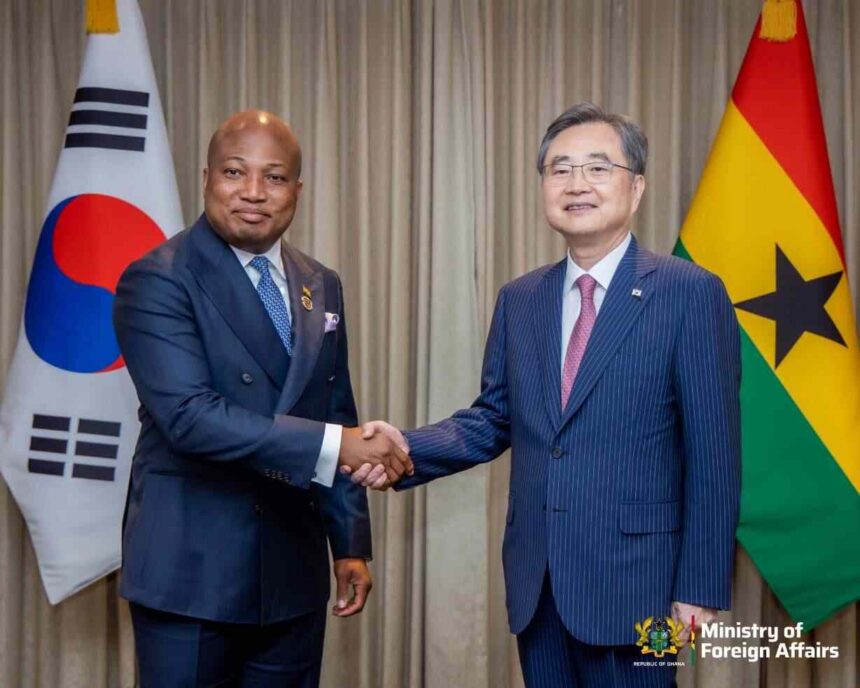
The agreement was announced on Monday, June 1, by Ghana’s Foreign Affairs Minister, Samuel Okudzeto Ablakwa, who described the development as a historic milestone in relations between the two countries.
Under the new arrangement, eligible holders of Diplomatic and Service Passports from Ghana and South Korea will be able to travel between the two nations without obtaining visas. The move is expected to enhance official exchanges, diplomatic cooperation, and government-to-government engagements.
Mr. Ablakwa indicated that discussions are already underway to expand the benefits of the agreement to a wider group of travelers.
“This is the first Visa Waiver Agreement by our two nations in almost 50 years of formal bilateral relations,” he said.
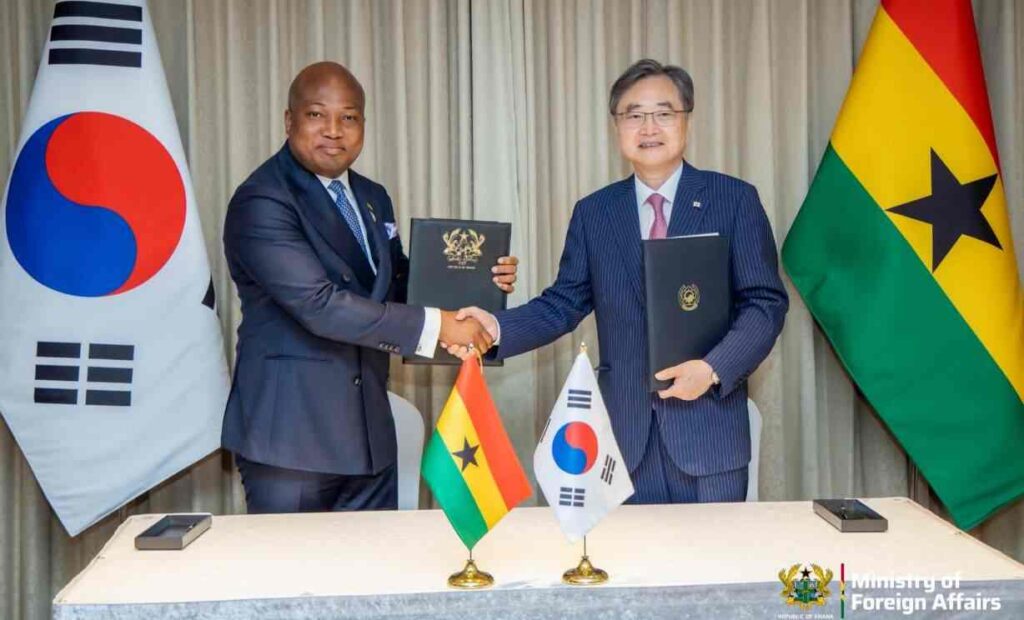
The agreement was signed during the ongoing Africa-Korea Foreign Ministers Meeting, where senior officials from African countries and South Korea are meeting to deepen political and economic partnerships.
Adding that “South Korean Foreign Minister H.E. Cho Hyun and I signed the agreement in the margins of the ongoing Africa-Korea Foreign Ministers Meeting.”
The latest diplomatic breakthrough follows efforts by both governments to strengthen cooperation in areas including trade, investment, technology, and international relations. Ghanaian officials view the visa waiver agreement as part of broader efforts to deepen engagement with South Korea and create new opportunities for collaboration.
Mr. Ablakwa also linked the agreement to recent high-level engagements between the two countries.
“I am delighted we are delivering on key priorities following the working visit of President Mahama to South Korea in March this year. For God and Country,” Mr Ablakwa wrote.
Officials are expected to continue negotiations aimed at extending visa-free travel arrangements to holders of Ordinary Passports, a move that could further boost business travel, tourism, and people-to-people exchanges between the two nations.