

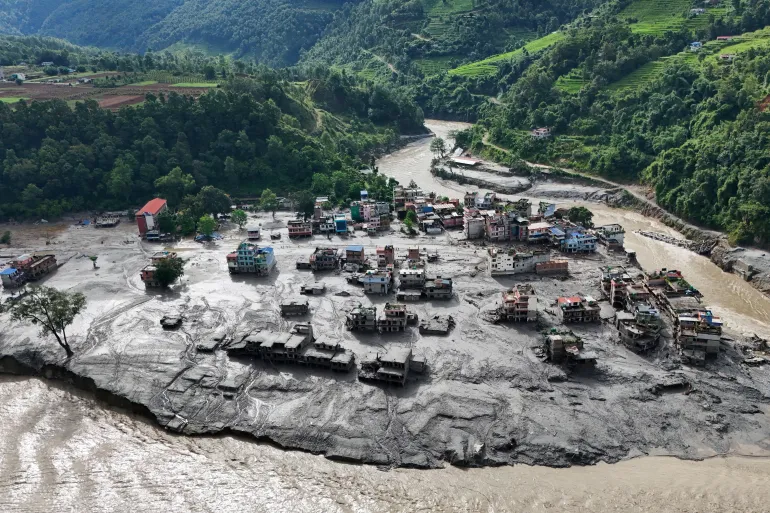
Nepal’s disaster management agency confirmed on Friday that the death toll from Wednesday’s catastrophic flash floods has climbed to 538, as emergency teams race against time and new safety warnings to reach hundreds of people who remain unaccounted for.
Data released by the National Disaster Risk Reduction and Management Authority indicates that 977 people remain missing across the region. A total of 14,829 security personnel have been deployed to search for survivors and bring relief to devastated mountain towns. Rescue teams have safely extracted 3,742 people from affected areas so far.
The surge in confirmed fatalities comes as emergency crews monitor fresh hazards downstream. Nepali police issued a high-alert warning on Friday following reports that a dam located across the border on the Tibetan side had burst. Authorities instructed security personnel and rescue units to stay ready for immediate evacuation to safer ground.
It remains unconfirmed whether the reported dam failure is connected to a high-altitude barrier lake created during the initial disaster. Chinese state broadcaster CCTV reported that the lake formed at an elevation of 2,950 meters (9,680 feet) on the Chinese side of the Himalayas. Both Nepali and Chinese officials had previously warned that the rising, overflowing body of water posed severe flooding risks downstream.
Threats of further water surges temporarily halted rescue teams heading toward Gyirong Port, a severely damaged border post. Ground teams consisting of some 680 rescuers later reached Gyirong using foot trails, rafts, and drone drops.
In Nepal’s Rasuwa district, military teams have focused heavily on reaching workers trapped inside a muddy tunnel complex at the Upper Trishuli-1 Hydropower Project. Ground footage showed rescue teams pulling mud-caked survivors out of the dark structures.
Nepali Army spokesperson Brig. Gen. Raja Ram Basnet stated that identifying the tunnel entry and exit points remains difficult because mud completely covers the area, adding that saving trapped survivors remains the military’s top priority.
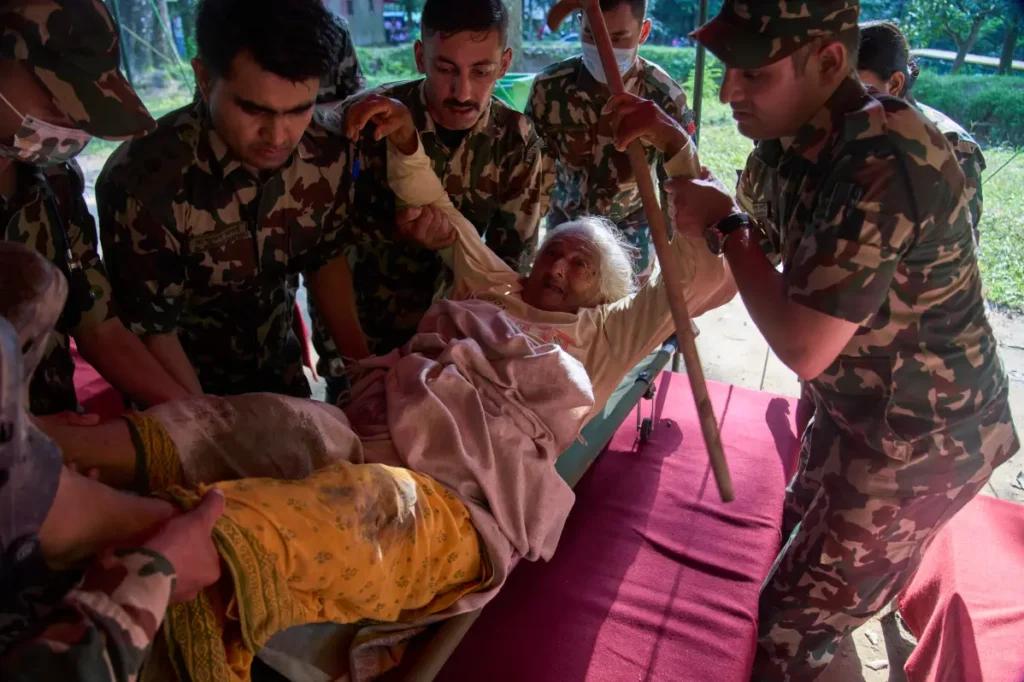
Official records state that helicopters have airlifted 3,253 people out of the disaster area, transporting injured survivors to facilities in Kathmandu and surrounding regions.
Scientists analyzing satellite imagery reported that the flash flood started high in the Himalayas when bedrock underneath a glacier collapsed. The massive collapse triggered a magnitude 5.2 seismic event, sending a torrent of rock, ice, and meltwater rushing through river valleys across Tibet and Nepal.
Survivors described an overwhelming wave of destruction. Karbir Gaire, a customs officer in the border village of Timure, recalled working on his computer on Wednesday morning when the ground began to shake.
”Right after the shake, I noticed a black storm coming towards us,” Gaire said from Kathmandu. “We all immediately started running out, and within a few seconds, we were climbing uphill on the opposite side of our office building. I think those 10 or so seconds saved some of us.”
Gaire added that 15 of his colleagues remain missing, describing the scene as a sudden “tsunami” that destroyed surrounding structures in seconds.
International concerns remain high due to the hundreds of foreign workers, trekkers, and religious pilgrims present in the region during the disaster. Nepal’s tourism board estimates that more than 500 foreign nationals are among the missing, including around 90 Americans. Relatives across the globe continue to wait for updates, particularly regarding pilgrims who were traveling toward Mount Kailash in Tibet.