

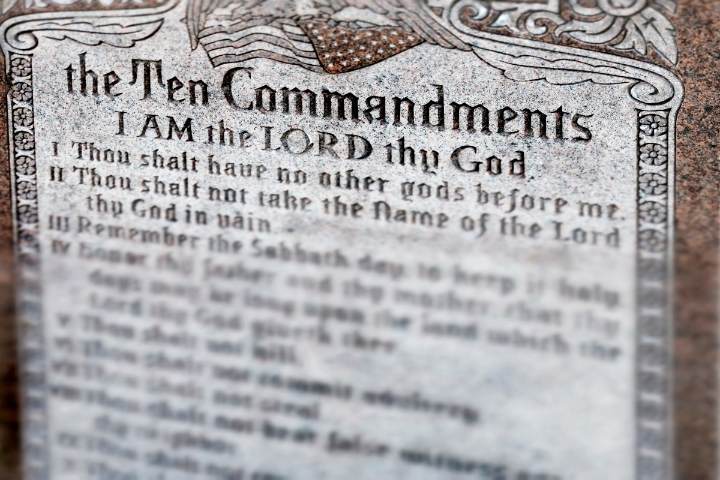
A federal judge has permanently stopped several Arkansas school districts from enforcing a controversial law that required the display of the Ten Commandments in public school classrooms, delivering a significant legal setback to supporters of the measure.
In a ruling issued Monday, Timothy Brooks determined that the Arkansas Ten Commandments law violates constitutional protections, specifically the Establishment Clause and the religious freedom rights of those who challenged it.
“Act 573’s purpose is only to display a sacred, religious text in a prominent place in every public-school classroom. And the only reason to display a sacred, religious text in every classroom is to proselytize to children. The State has said the quiet part out loud,” the judge wrote.
The decision applies to specific school districts involved in the case rather than imposing a statewide ban, leaving room for further legal challenges and potential enforcement elsewhere in Arkansas.
Civil liberties advocates welcomed the ruling, arguing it protects students from religious pressure in public education settings. Heather Weaver, senior counsel for the American Civil Liberties Union’s Program on Freedom of Religion and Belief, emphasized the broader impact on students’ rights.
“Today’s decision ensures that our clients’ classrooms will remain spaces where all students, regardless of their faith, feel welcomed and can learn without worrying that they do not live up to the state’s preferred religious beliefs,” she said.
State officials, however, are preparing to challenge the ruling. Tim Griffin’s office confirmed it is reviewing the decision and plans to appeal, signaling that the legal fight is far from over.
The Arkansas case arrives amid a growing national divide over similar laws. In a separate decision, the U.S. Court of Appeals for the Fifth Circuit recently upheld a Louisiana law mandating Ten Commandments displays in classrooms, creating a split among federal courts. Arkansas falls under the jurisdiction of the U.S. Court of Appeals for the Eighth Circuit, which could reach a different conclusion.
For now, the ruling halts enforcement in the affected districts, marking a key moment in the ongoing national debate over religion in public schools and the limits of government involvement in faith-based expression.