

In today’s digital world, keeping customer data safe is a top goal for every company. Data breaches cost companies millions of dollars each year. Stringent rules like the GDPR, HIPAA, and the EU AI Act make data privacy mandatory. Using dependable data anonymization tools helps protect customer details while keeping information useful for business growth.
What Is Data Anonymization Software and How Does It Work?
Data anonymization software removes or alters personal details from datasets. It strips names, emails, and ID numbers so data cannot trace back to an individual person. Businesses use these tools to share data safely with researchers, vendors, and internal teams without risking private data leaks or heavy compliance fines.
Anonymization tools protect user privacy while preserving data patterns. Your team can still run analytics, train AI models, and build reports without exposing sensitive user information.
Learn more about implementing data anonymization software to safeguard your infrastructure.
How Do You Assess Your Business Anonymization Needs?
Before buying software, check your current data environment. Take these three steps to assess your risks:
- Identify Your Data Types: Find where customer records, financial numbers, and employee profiles live inside your network.
- Check Compliance Rules: Review global privacy laws like GDPR, HIPAA, and CCPA that affect your business region.
- Measure Data Scalability: Estimate your total daily data volume to ensure the tool scales easily as your enterprise expands.
What Are the Top Features of Data Anonymization Software?
The right software balances strong security with ease of use. Focus on these core capabilities during your evaluation:
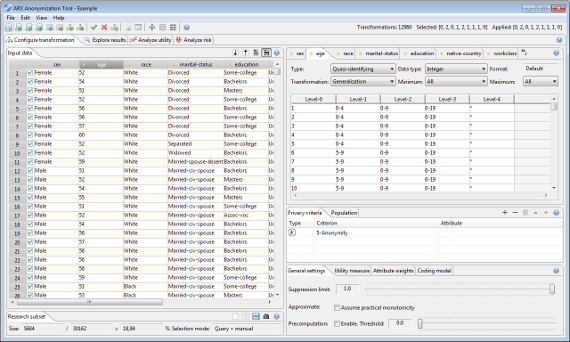
- Proven Anonymization Methods: Ensure the software supports effective techniques like data masking, generalization, pseudonymization, and differential privacy.
- Strict Legal Compliance: Verify the tool meets international privacy regulations and AI compliance standards.
- Simple Systems Integration: Select platforms that connect directly with your cloud storage, SQL databases, and pipelines.
- User-Friendly Controls: Choose non-technical dashboards so your legal and management teams can run privacy audits.
- High-Grade Security Protocols: Look for strong AES 256-bit data encryption at rest and in transit.
Related: How to fix an iPhone stuck in SOS mode during a cellular network outage
How Should You Evaluate Anonymization Vendors?
Selecting a software partner requires careful research into vendor stability and support services:
- Reputation and Reviews: Check verified user feedback on industry platforms to inspect uptime and reliability history.
- Responsive Support: Pick providers with 24/7 technical customer support for emergency troubleshooting.
- Frequent Software Updates: Choose vendors that ship regular patches to meet updated privacy laws.
How Much Does Data Anonymization Software Cost?
Pricing structures vary based on storage size and deployment types. Most providers use continuous subscription models or one-time license fees. Focus on these financial factors:
- Budget Planning: Calculate total setup costs, annual licensing fees, and cloud usage costs.
- Cost-Benefit Analysis: Compare tool expense against the average $4.44 million cost of an enterprise data breach.
How Do You Conduct a Software Trial Run?
Never sign a software contract without thorough testing. Run a pilot program using mock datasets first:
- Test Sample Workloads: Process typical datasets to verify that data utility remains intact after masking.
- Verify System Speed: Check processing times across large databases to ensure processing workflows stay fast.
How Do You Plan for Long-Term Software Deployment?
Anonymization is an ongoing process. Set up these operational guidelines to guarantee long-term success:
- System Scalability: Ensure software infrastructure handles sudden database expansions without slowing down.
- Employee Training: Teach team members proper data handling methods to stop accidental disclosures.
- Regular Audits: Schedule monthly privacy reviews to check software output accuracy.
What Should You Check Before Making the Final Purchase?
Complete these final deployment checks before finalizing your enterprise contract:
- Contract Review: Examine support level agreements (SLAs), maintenance updates, and hidden data migration costs.
- Integration Strategy: Outline clear timelines for linking the software to existing data pipelines smoothly.
Protecting Customer Trust with Anonymization
Choosing the right data anonymization software secures business data and ensures regulatory compliance. Investing in reliable privacy tools shields your enterprise from cyber threats and earns lasting customer trust.
Read More: How Mobile Data Collection Can Improve Customer Service
Frequently Asked Questions About Data Anonymization Software
What is the main difference between anonymization and pseudonymization?
Anonymization permanently wipes all personal identifiers so data can never connect back to an individual. Pseudonymization replaces private details with fake values or keys, allowing authorized users to re-identify the data using a secure decryption key.
Does anonymized data fall under GDPR compliance rules?
No, properly anonymized data is no longer classified as personal data under GDPR Article 4.1. Once data undergoes irreversible anonymization, it is exempt from standard GDPR restrictions.
Can anonymized data be used to train AI models?
Yes, anonymized data is ideal for training AI models. It preserves essential patterns needed for machine learning while protecting sensitive user details from leaking into public algorithms.