

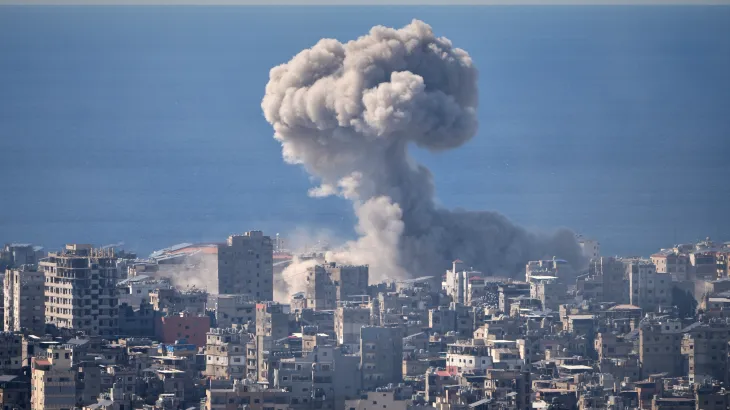
The early days of the war against Iran are already carrying a massive financial burden for the United States, with Pentagon officials estimating the first six days of combat operations have cost roughly $11.3 billion.
The figure was shared with U.S. senators during a classified briefing on Capitol Hill on Tuesday, according to a source familiar with the discussion. The estimate marks the most detailed financial assessment lawmakers have received since the United States and Israel launched coordinated airstrikes against Iran on Feb. 28.
While the Pentagon has not publicly confirmed the specific amount, officials acknowledged that the full price tag of the military campaign remains uncertain. A spokesperson for the Defense Department said the total cost of the operation cannot be finalized yet.
“until the mission is complete.”
The campaign, known as Operation Epic Fury, has rapidly intensified across multiple fronts in the Middle East. Military planners say the early phase of the conflict required extensive use of high-cost precision munitions, air operations, and naval deployments.
Lawmakers are increasingly scrutinizing the financial and strategic implications of the escalating conflict. The latest estimate surfaced as Congress debates whether to approve additional defense funding to sustain military operations in the region.
Several Democratic lawmakers have signaled they may oppose a supplemental defense spending package until the administration provides more transparency about the objectives, scope, and projected costs of the war.
Independent analysts have also attempted to estimate the financial impact of the campaign. A report from the Center for Strategic and International Studies estimated that the first 100 hours of Operation Epic Fury alone cost approximately $3.7 billion, averaging roughly $891.4 million per day.
Pentagon data previously shared with lawmakers also revealed the enormous scale of early combat operations. Defense Department officials estimated that about $5.6 billion worth of munitions were used within the first two days of the conflict.
Meanwhile, U.S. military commanders say the operational tempo remains intense. According to U.S. Central Command Commander Adm. Brad Cooper, American forces have carried out strikes on more than 5,500 targets inside Iran since the war began.
Cooper also reported Wednesday that U.S. forces have struck or sunk more than 60 Iranian ships, highlighting the widening maritime dimension of the conflict.
As the fighting continues, lawmakers and defense analysts expect the financial toll of the war to climb significantly — especially if the campaign expands or drags on for months.
The growing cost is likely to play a central role in congressional debates over national security spending, military strategy, and the broader geopolitical implications of the conflict in the Middle East.