
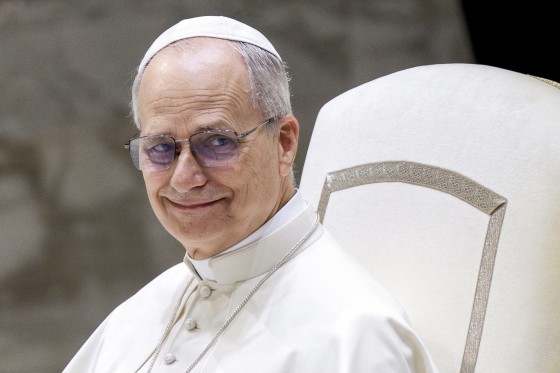

Pope Leo on Sunday issued a strong call for Venezuela to remain an independent and sovereign nation, reacting publicly to the dramatic political upheaval following the United States’ toppling of President Nicolas Maduro.
Speaking before thousands of pilgrims gathered in St. Peter’s Square for his weekly Angelus prayer, the pontiff said he was closely monitoring developments in the South American country with a “soul full of concern.” His remarks came a day after U.S. President Donald Trump announced that American forces had carried out a raid to capture Maduro, who is now being held in a New York detention center awaiting drug-related charges.
Leo, the first American pope in history, emphasized that Venezuela’s future must be determined by justice, peace, and respect for constitutional order not violence or external domination.
“We must not delay in overcoming violence and embarking on paths of justice and peace, while guaranteeing the country’s sovereignty,” the pope told the crowd, underscoring the importance of national self-determination.
The pontiff also called for respect for human rights and the rule of law “as enshrined” in Venezuela’s constitution, signaling concern about the legal and humanitarian consequences of the sudden transfer of power.
President Trump, speaking on Saturday, said the United States would take control of oil-rich Venezuela following the operation that led to Maduro’s arrest. The announcement immediately sparked global debate over international law, sovereignty, and the future governance of the country.
Pope Leo has previously voiced unease over the use of military force in Venezuela. In December, he urged President Trump not to remove Maduro through armed intervention, warning that such actions could deepen suffering among ordinary citizens.
“The good of the beloved Venezuelan people must prevail over every other consideration,” the pontiff said, reiterating his call for solutions rooted in peace rather than power.
As international reactions continue to unfold, the Vatican’s message adds a moral and diplomatic voice to a rapidly evolving crisis that could reshape regional politics and global energy markets.
Also Read: Trump Denies Health Concerns, Says CT Scan Was Routine, Not MRI