
South Africa has sharply criticized Ghana’s handling of public statements surrounding the evacuation of Ghanaian nationals, accusing Accra of spreading misinformation and turning a sensitive diplomatic issue into a public dispute.
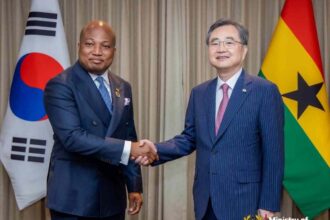
The rebuke came from Ronald Lamola, South Africa’s Minister of International Relations and Cooperation, who issued a detailed response to recent comments by Ghana’s Foreign Affairs Minister, Samuel Okudzeto Ablakwa.
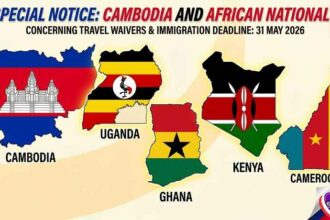
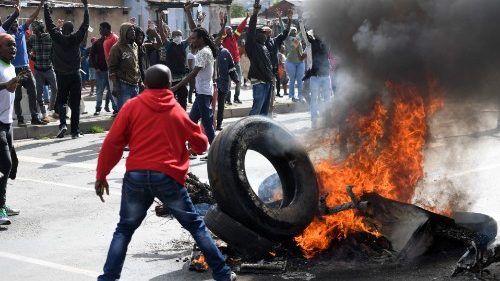
At the center of the disagreement is the ongoing repatriation of Ghanaian citizens from South Africa following concerns linked to anti-immigrant tensions and immigration enforcement measures. Lamola accused Ghana’s government of presenting an inaccurate picture of events and said Pretoria would no longer accept what it views as misleading public narratives.
“Our initial hope was simply to assist the Government of Ghana in repatriating its citizens in a humane and cordial manner. However, we will not continue to tolerate these public spectacles, characterised by incomplete information and outright misinformation devoid of any diplomatic decorum,” Lamola stated.
The South African minister described Ablakwa’s public remarks as “deeply disappointing” and “replete with misinformation.” He specifically rejected claims regarding casualties among African nationals during recent anti-immigrant attacks, arguing that the figures cited by Ghana did not align with information available to South African authorities.
Lamola also challenged reports that 15 Ghanaian nationals were receiving treatment in South African hospitals. According to him, his government had not received evidence supporting those claims. He added that Ghana’s High Commissioner had not provided South African officials with information about any of the alleged hospitalised individuals, including a case previously referenced in media interviews.
The dispute extends beyond public statements. South African authorities say an investigation into a repatriation flight that departed on May 27 found that a significant majority of passengers lacked valid immigration documentation.
According to findings from South Africa’s Department of Home Affairs and Border Management Authority, roughly 90 percent of the 300 passengers on the flight were undocumented. Officials also found that many had overstayed their visas, in some cases for more than a year. The Ghanaian Embassy reportedly issued emergency travel certificates to allow those individuals to return home.
Diplomatic tensions increased further after Ghana suggested possible legal action against South African companies. Lamola responded with a warning that Pretoria would “vigorously defend any frivolous or baseless lawsuit emanating from Ghana.”
He also disclosed that he had previously written to his Ghanaian counterpart regarding what he described as increasingly difficult operating conditions for South African businesses in Ghana. Lamola said he would be prepared to make the correspondence public if its existence was disputed.
Despite the growing disagreement, South Africa signaled that it remains open to dialogue. Lamola reaffirmed his country’s support for regional cooperation and said migration-related concerns should be addressed through bilateral discussions or wider African platforms, including the African Union.
“Let us be factual in our engagements and not pander to unnecessary public spectacles that are devoid of any diplomatic decorum,” he said.
The exchange marks one of the most public diplomatic disagreements between the two African nations in recent years, highlighting growing sensitivities around migration, business interests, and regional cooperation.