
A growing legal and political dispute is unfolding in the United States as Texas and Florida face mounting criticism for efforts that could exclude Islamic schools from participating in state-funded school voucher programs.
The controversy centers on alleged ties between certain Islamic schools and the Council on American-Islamic Relations, widely known as CAIR, a Muslim civil rights organization. Despite lacking any federal designation or criminal conviction labeling it a terrorist organization, officials in both states have sought to restrict institutions connected to the group from accessing public education funding through school choice initiatives.
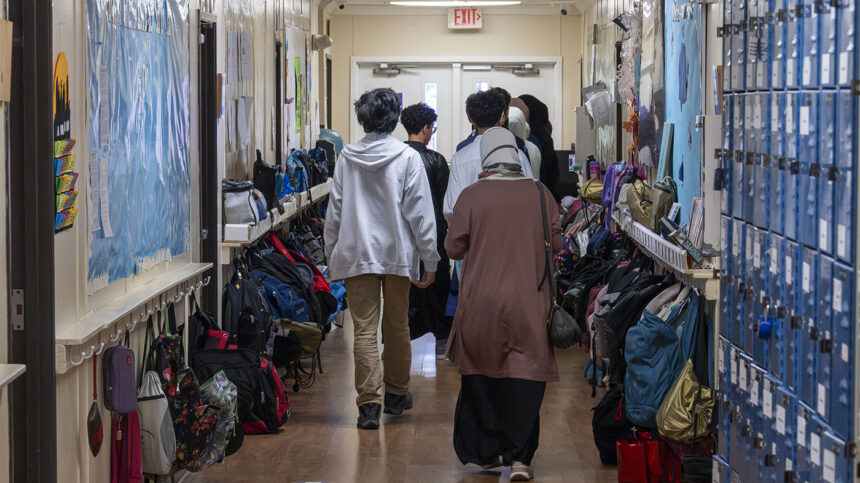
In Texas, roughly two dozen Islamic private schools have reportedly been excluded from the state’s expanding school voucher program. State officials claim the decision stems from possible associations with CAIR. The action has already sparked two federal lawsuits filed by Muslim families and private schools, who argue the policy unfairly singles out Islamic institutions.
The lawsuits accuse the state of discrimination, alleging that authorities have “systematically targeted Islamic schools for exclusion.”
The dispute intensified after Texas Acting Comptroller Kelly Hancock flagged certain schools that had been accredited by the education organization Cognia and had hosted events involving CAIR. Republican Gov. Greg Abbott previously declared CAIR a terrorist group, a position that critics say lacks legal standing at the federal level.
Supporters of the policy insist the issue is related to national security concerns rather than religious discrimination.
“What is going on is this has nothing to do with religion or freedom of religion. This has everything to do with ensuring that in no way is Texas providing financial support to entities tied to or a part of terrorist organizations or hostile foreign nations like the Communist Party of China,” said Mandy Drogin, senior fellow at the Texas Public Policy Foundation.
However, education leaders and school advocates question whether many of the affected institutions have any verifiable links to the advocacy group.
Laura Colangelo, executive director of the Texas Private Schools Association, defended the schools that have reportedly been excluded from the program.
“The schools that I know that haven’t been invited — the accredited private schools that happen to be Islamic — are really good schools that have great curriculum … they have a strong community culture. The families really are well served by the schools, and I do not think they’re doing anything that is accused in these opinions,” said Laura Colangelo, executive director of the Texas Private Schools Association.
“I am certain that there are schools that have absolutely no connection to CAIR that could prove that, and I would like for them to be able to have that opportunity,” she added.
Officials within the Texas comptroller’s office have begun reviewing some schools accredited by Cognia to determine whether they meet legal requirements to participate in the voucher program. However, reports indicate it remains unclear what documentation schools must provide to demonstrate compliance with state law.
A similar debate is taking shape in Florida, where lawmakers are considering legislation that could prevent schools with ties to CAIR from accessing the state’s voucher system. Although a judge previously struck down Gov. Ron DeSantis’s attempt to designate CAIR as a terrorist organization, the proposed law could still limit participation for schools connected to the group if enacted.
The broader dispute is unfolding against a backdrop of political tensions surrounding Islam and Muslim communities in the United States.
Some critics point to rhetoric from certain political figures as evidence of a broader climate of hostility. Texas lawmakers in Congress have created a Sharia-Free America Caucus, while several political candidates have campaigned using strongly anti-Muslim messaging.
“We should ban the burqa, the hijab, the abaya, the niqab,” Larry Brock, a Republican candidate for Texas’s state legislature, said at event last month, according to The New York Times. “No to halal meat. No to celebrating Ramadan. No, no, no.”
The controversy has also extended beyond Texas. In Florida, Republican Rep. Randy Fine faced calls from Democrats for formal censure after posting online that he would choose dogs over Muslims if forced to pick. Meanwhile, Sen. Tommy Tuberville of Alabama was widely criticized for linking New York City Mayor Zohran Mamdani’s Ramadan iftar event at City Hall to the Sept. 11, 2001 attacks.
Leaders within CAIR strongly deny the allegations being used to justify the restrictions and argue that Muslim families are being unfairly targeted.
“What we are seeing is not even religious discrimination, what we are seeing is religious persecution. Those families, they choose private Islamic schools, they pay taxes like everyone else, but they were not evaluated based on objective criteria under the law,” said Shaimaa Zayan, operations manager for CAIR-Austin.
“This religious persecution is based on narrative, not reality. We have officials and politicians in Texas who have been creating panic about Muslim and Islam to justify religious persecution of peaceful, law-abiding Muslim citizens here,” Zayan added.
The debate is unfolding as school voucher programs expand rapidly across the United States. Since the COVID-19 pandemic, many Republican-led states have adopted school choice policies that allow families to receive government funds to help cover private school tuition and education expenses.
At the federal level, Republicans introduced the first nationwide school choice initiative during the administration of President Donald Trump. The program allows donors to receive a dollar-for-dollar tax credit when contributing to scholarship funds, provided their state participates.
But critics say the disputes in Texas and Florida highlight a deeper concern about who ultimately benefits from those programs.
Neal McCluskey, director of the Center for Educational Freedom at the Institute, warned that excluding certain schools without legal proof of wrongdoing could undermine the purpose of school choice policies.
“I think it is problematic because it undermines the purpose of choice, which is to let families and educators make decisions among themselves about who provides education and how it’s done,” said Neal McCluskey, director for the Center for Educational Freedom at the Institute. “Unless a school is found guilty in a court of law of criminal activity, that school should be something that people can choose.”
As legal battles continue and state lawmakers debate new restrictions, the issue is likely to remain a flashpoint in the national discussion over education policy, religious freedom, and the future of publicly funded school choice programs.