
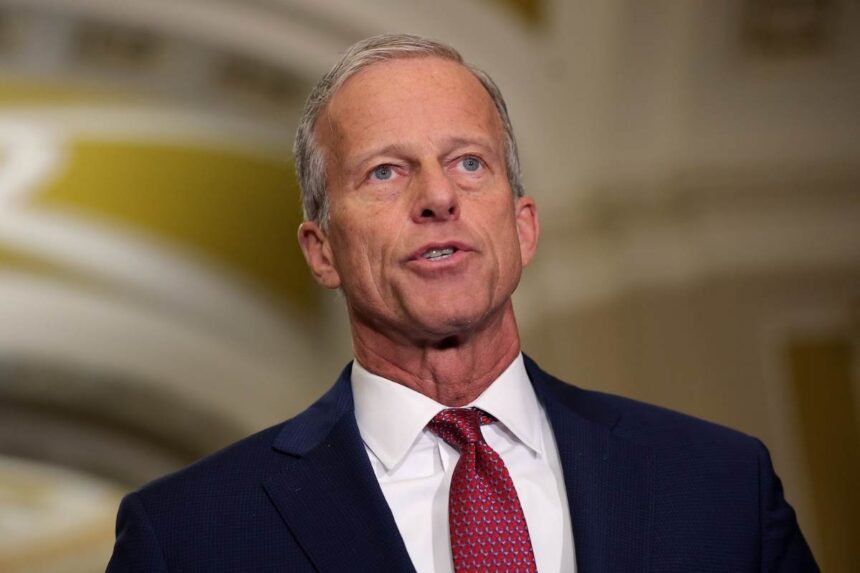
A growing divide within Republican leadership surfaced Tuesday after Senate Majority Leader John Thune said the Senate does not have enough support to force a procedural showdown over the Safeguard American Voter Eligibility Act, commonly known as the SAVE Act.
Speaking candidly about the chamber’s legislative reality, Thune acknowledged that calls to compel Democrats to mount a “talking filibuster” against the bill simply do not have the votes required to move forward.
“The votes aren’t there, one, to nuke the filibuster, and the votes aren’t there for a talking filibuster. It’s just a reality,” Thune said Tuesday. “I’m the person who has to deliver sometimes the not-so-good news that the math doesn’t add up, but those are the facts and there’s no getting around it.”
The proposal under discussion would alter Senate procedure in a way that forces opponents of legislation to physically hold the chamber floor and continue debating in order to maintain a filibuster. Advocates say such a move would make it harder to quietly block controversial measures.
At the center of the debate is the SAVE Act, a Republican-backed election integrity proposal that would require individuals to present documented proof of U.S. citizenship before registering to vote. Supporters argue the measure strengthens election security, while critics say it could create barriers for eligible voters who lack easy access to citizenship documentation.
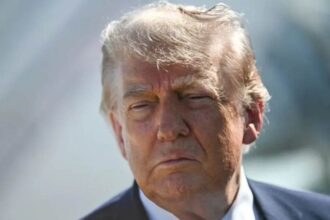
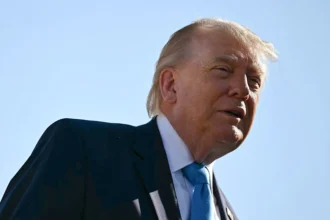
Pressure to advance the bill intensified after U.S. President Donald Trump urged Republican lawmakers to prioritize its passage ahead of upcoming midterm elections.
Speaking to GOP members during an issues conference in Doral, Florida, Trump described the legislation as essential to the party’s electoral strategy.
“It will guarantee the midterms. If you don’t get it, big trouble,” Trump warned.
Trump also suggested that voter concerns are overwhelmingly focused on election safeguards rather than other policy debates currently underway in Washington.
“The people are demanding it. Every time I go out, save America! Save America! That’s all they talk about. They don’t talk about housing,” Trump said, referencing housing reform legislation currently being debated on the Senate floor.
The president has also raised the stakes by signaling he may refuse to sign most legislation passed by Congress unless lawmakers first approve the SAVE Act. According to his remarks, the only potential exception would be a funding bill for the Department of Homeland Security.
Despite the pressure, Thune’s comments highlight a fundamental hurdle: Senate math
Changing filibuster procedures requires support from enough senators to overcome the chamber’s tightly divided balance, something Thune indicated is not currently achievable.
For now, that reality leaves the SAVE Act stalled procedurally in the Senate, even as it becomes a focal point in broader debates over election law, voting access, and Republican priorities ahead of the next national vote.