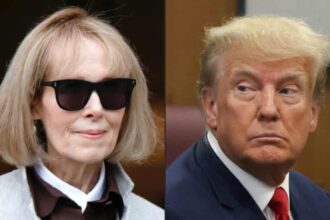

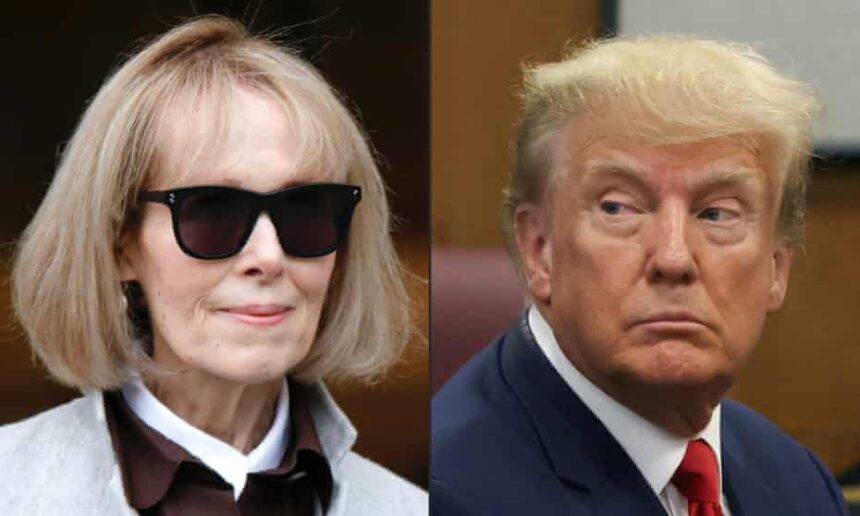
A federal judge has denied President Donald Trump’s latest effort to delay paying a $5.8 million civil judgment to writer E. Jean Carroll, leaving him just days to release the money unless he files another legal challenge.
U.S. District Judge Lewis Kaplan rejected Trump’s request in a one-sentence order issued on July 4. The ruling came only days after the U.S. Supreme Court declined, without explanation, to hear Trump’s appeal of the jury’s 2023 verdict.
The judgment stems from a New York civil case in which a jury found that Trump sexually abused Carroll in 1996 and later defamed her after she publicly described the incident in 2019. The jury awarded Carroll $5.8 million in damages.
Trump’s legal team argued that more time was needed because his former lead attorney, Justin Smith, left the case after being confirmed to a federal judgeship in June following Trump’s nomination. His replacement, Josh Halpern, needed additional time “to become completely familiar with the facts and procedural circumstances,” Trump’s attorneys said in court filings.
Carroll’s attorney, Roberta Kaplan, disputed that explanation, arguing the request was simply another attempt to postpone payment. She wrote that the motion “appears to be little more than yet another play for time,” adding that Trump had known for months that Smith would leave the case and had “ample time to retain new counsel.”
Judge Kaplan issued the decision as a text-only docket order, without a separate written opinion.
The ruling means Trump has until Tuesday to transfer the money, which is currently being held in an escrow account, to Carroll unless he presents additional legal arguments explaining why the payment should not proceed.
The dispute is separate from Trump’s appeal of another judgment involving Carroll. In January 2024, a Manhattan jury ordered Trump to pay $83.3 million in a separate defamation case tied to statements he made about Carroll.
Carroll’s legal team has warned that Trump could attempt to combine the two cases in an effort to delay payment of both awards.
Related: Trump White House Says Smithsonian Leadership “Can’t Be Trusted” to Tell American History
In a court filing, Roberta Kaplan wrote: “We can only assume that defendant is seeking … to buy time so he can try to concoct some new basis to put off paying plaintiff presumably in connection with his forthcoming petition and motion for a rehearing,”
Before leaving the case, Smith told the Supreme Court that Trump planned to appeal the larger judgment as well. He argued that: “the court may wish to consider the petitions together”
because both cases involve the same parties.
The larger case also raises questions about presidential immunity because it centers on statements Trump made while serving his first term as president. Carroll’s attorneys argue that combining the appeals could create a legal path that might erase both judgments.
Judge Kaplan has repeatedly ruled against Trump during the litigation. After the 2023 verdict, Trump criticized the judge on his Truth Social platform, pointing to Kaplan’s appointment by President Bill Clinton.
Trump wrote: “What else can you expect from a Trump Hating, Clinton appointed judge, who went out of his way to make sure that the result was as negative as it could possible be, speaking to, and in control of, a jury from an anti-Trump area which is probably the worst place in the US for me to get a fair ‘trial’.”