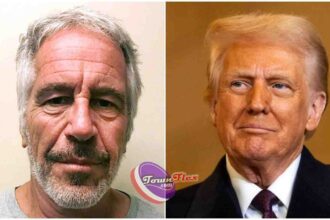




President Trump on Tuesday urged the country to move on from the Jeffrey Epstein controversy following the Justice Department’s release of nearly 3 million additional records tied to the late financier, calling the ongoing focus on the case a distraction from more pressing national issues.
“I think it’s really time for the country to get on to something else,” Trump told reporters in the Oval Office, repeating the message later by adding, “I think it’s time now for the country to maybe get onto something else like health care. Something that people care about.”
The latest document release, made public late last week, includes thousands of photos of Epstein’s properties, internal emails, flight logs, and tips submitted to the FBI through the National Threat Operations Center. Trump said he had not personally reviewed the materials.
The files reference several prominent figures, including Trump, former President Clinton, billionaire Elon Musk, and Commerce Secretary Howard Lutnick. None of the individuals named have been accused of criminal wrongdoing, though their appearance in the records has renewed scrutiny of their past associations with the convicted sex offender.
Trump dismissed any implication involving Musk and Lutnick, saying, “I’m sure they’re fine,” and reiterated his longstanding claim that the documents vindicate him. He also alleged a broader effort to damage his reputation, describing it as a “conspiracy” carried out by “Epstein and other people.”
The Epstein files have remained a persistent political issue throughout Trump’s second term, drawing criticism from both Democrats and Republicans over how the administration has handled the disclosure process related to Epstein and his associate Ghislaine Maxwell.
Initially, Trump’s Justice Department resisted calls to release the records. That position shifted dramatically last November, when Trump publicly encouraged Republicans to back legislation mandating disclosure. The measure, later signed into law by the president as the Epstein Files Transparency Act, required the Justice Department to review and publish the materials with limited redactions.
Deputy Attorney General Todd Blanche said Sunday that the department had completed its obligations under the statute. “This review is over,” Blanche said on ABC’s “This Week.” “I mean we reviewed over 6 million pieces of paper, thousands of videos, thousands — tens of thousands of images … which is what the statute required us to do.”
Some lawmakers dispute that claim. Rep. Ro Khanna (D-Calif.), a co-author of the law, said the administration has not fully complied and is pushing, alongside Rep. Thomas Massie (R-Ky.), for access to the complete, unredacted files.
“They’ve released, at best, half the documents. But even those shock the conscience of this country,” Khanna said on NBC’s “Meet the Press,” pointing to references involving “some of the most wealthy individuals, tech leaders, finance leaders, politicians.”
The law allows redactions to protect victims’ identities and prevent harm to ongoing investigations, but explicitly bars withholding information to avoid “embarrassment, reputational harm, or political sensitivity.”
On Monday, the Justice Department acknowledged removing “several thousands of documents and media that may have inadvertently included victim-identifying information,” attributing the issue to “technical or human error.”