
U.S. President Donald Trump has warned that military action against Iran remains on the table, even as both sides exchange proposals aimed at easing a growing global energy crisis.
Speaking before departing West Palm Beach for Miami, Trump confirmed he had reviewed a broad outline of a potential agreement from Tehran but was still waiting on full details. His tone stayed cautious, and firm.
“They told me about the concept of the deal. They’re going to give me the exact wording now.”
Despite ongoing diplomacy, Trump signaled doubt. He later wrote on social media that the proposal likely would not meet U.S. expectations and argued Iran had not faced enough consequences for its actions.
Tensions center on the Strait of Hormuz, a critical shipping route that handles about 20% of the world’s oil and gas. Iran has blocked most foreign vessels for more than two months, triggering a surge in global energy prices and straining economies worldwide.
A senior Iranian official, speaking anonymously due to the sensitivity of negotiations, said Tehran had offered a new framework. The plan would reopen the strait and end the U.S. naval blockade. In exchange, both sides would delay talks on Iran’s nuclear program until later stages.
This shift, the official said, aims to break the current deadlock.
“Under this framework, negotiations over the more complicated nuclear issue have been moved to the final stage to create a more conducive atmosphere.”
The proposal also includes sweeping demands: lifting sanctions, releasing frozen Iranian assets, withdrawing U.S. forces from nearby regions, and securing guarantees against future attacks by the United States and Israel.
Washington has not accepted these terms.
Trump remains clear on one point—Iran must never obtain nuclear weapons. He has repeated that position throughout the conflict, which escalated earlier this year when U.S. forces launched strikes during stalled nuclear negotiations. Tehran insists its nuclear program is peaceful.
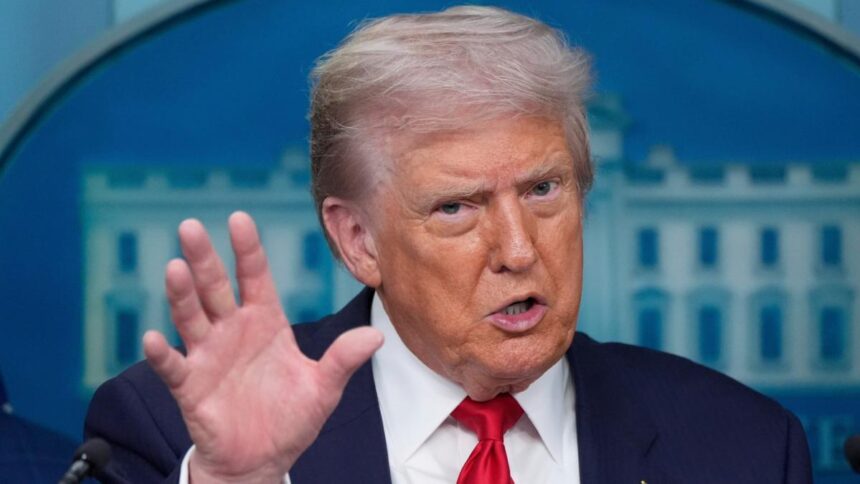
When asked directly about renewed military action, Trump avoided a definitive answer but left little ambiguity.
“I don’t want to say that. I mean, I can’t tell that to a reporter. If they misbehave, if they do something bad, right now we’ll see. But it’s a possibility that could happen.”
At the same time, Trump acknowledged the human cost of continued war and suggested he does not favor escalation. He also told congressional leaders he does not require approval to extend military operations, arguing a prior ceasefire effectively ended legal constraints.
The conflict has already caused thousands of deaths and disrupted global markets. A joint U.S.-Israel bombing campaign paused four weeks ago, yet no lasting agreement has emerged.
Pressure is building at home. Rising fuel costs, driven by the blocked strait, are hitting American consumers. With midterm elections approaching in November, Trump’s Republican Party faces potential backlash from voters frustrated by high gasoline prices.
Iran’s latest proposal attempts to shift focus away from nuclear issues—at least temporarily. The idea is to secure immediate economic relief and restore oil flows before tackling deeper disagreements.
For now, both sides remain locked in a high-stakes standoff. The risk of renewed conflict and further economic shock, continues to hang over the negotiations.