
The United Arab Emirates has entered talks with the United States over a potential currency swap line, a move that signals tighter financial coordination as global energy markets face rising instability.
Speaking at a major industry event in Abu Dhabi, Trade Minister Thani Al Zeyoudi confirmed the discussions, framing them as part of a selective U.S. policy reserved for a handful of trusted economic partners.
“We have this discussion and conversation with many, it’s part of an elite group that the U.S. is having this swap policy with. They are only having it with five countries,” he said.
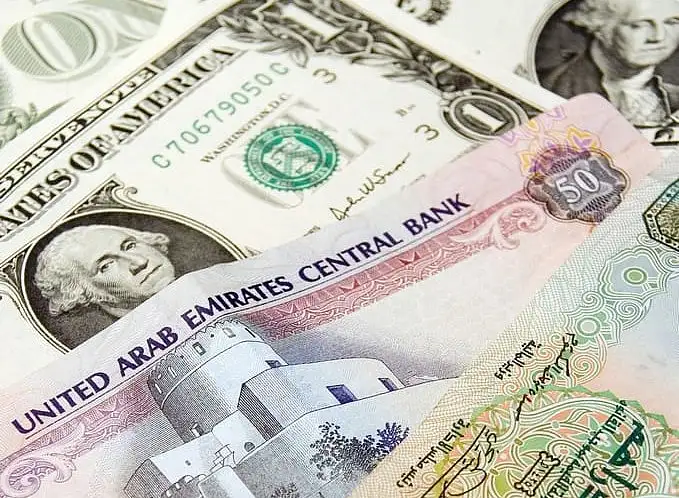
The arrangement would allow both countries’ central banks to exchange currencies directly. That reduces reliance on volatile foreign exchange markets and lowers transaction costs for businesses engaged in cross-border trade and investment.
Al Zeyoudi emphasized the strategic weight behind such an agreement. “Being part of that group means that transactions… trade, investments between both nations reach a level where that swap is highly needed … so it is an elite matter, (it) is not about bailing out,” he told the “Make It In The Emirates” event.
At present, the U.S. Federal Reserve maintains permanent swap lines with five major central banks: Canada, Japan, the eurozone, the United Kingdom, and Switzerland. Inclusion in this circle would place the UAE among a small group of globally significant financial partners.
The timing of the talks reflects broader geopolitical pressures. U.S. Treasury Secretary Scott Bessent recently disclosed that several allies in the Gulf and Asia have sought similar arrangements. These requests follow mounting economic strain linked to disruptions in global energy supply.
The ongoing Middle East conflict has sharply intensified those concerns. Since strikes involving U.S. and Israeli forces against Iran earlier this year, the Strait of Hormuz, a critical route for roughly 20% of the world’s oil and liquefied natural gas has effectively been shut. The disruption has pushed oil prices higher and increased financial uncertainty across markets.
A currency swap line could help cushion such shocks. By improving liquidity access in U.S. dollars, countries like the UAE can stabilize trade flows even during periods of market stress.
No details have been released on the scale or timeline of a potential agreement. Officials have also not confirmed whether negotiations are nearing completion.
Still, the discussions highlight a clear shift. As global trade faces new risks, financial alliances are becoming more targeted, and more strategic.