



A factory worker in Russia thought he had finally struck gold when a staggering $87,000 landed in his account, money he believed was part of a rumored company bonus. Unfortunately for him, it was just a payroll glitch, and now he’s being sued for refusing to give it back.
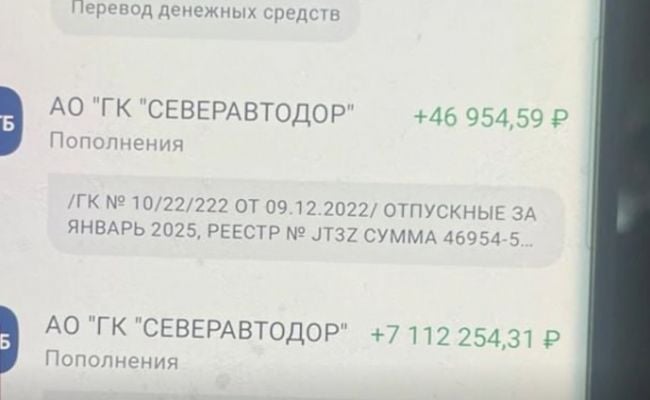
The worker, Vladimir Rychagov from Khanty-Mansiysk, was expecting around 46,954 rubles ($581) in vacation pay. Instead, his bank app showed 7,112,254 rubles ($87,000), the combined salaries of 34 employees from another branch of the same company, sent by mistake due to a software malfunction.
At first, Rychagov couldn’t believe his luck. Then the calls from accounting started. When told the transfer was an error and he needed to return the money, he turned to Google for legal advice.
“After checking the internet, I found that if it was a technical error, it was up to me to return it, but if it was a billing error, I was obligated to return it,” he told Channel 5. “Later, I learned it was a technical error and decided I had the right to keep the money.”
Soon after, the company demanded repayment through the courts, arguing the funds were clearly marked as salaries and never approved as bonuses. But Rychagov stood firm, saying the payment order listed “salary,” which made him believe the money was his.
While under pressure to return the cash, he bought a new car and moved his family to another city. His employer filed a financial lawsuit, freezing his bank accounts.
“A complaint was filed against me, alleging I was in collusion with an accountant,” he recalled. “The accusations were quickly dismissed due to lack of evidence.”
Two courts have ruled that Rychagov must return the full amount, finding that the transfer “was not legitimate salary.” Refusing to accept defeat, he’s now appealing the decision in Russia’s Supreme Court, still insisting the money was rightfully his.
“My bank account received a deposit of 45,000 rubles for vacation pay and 7,112,000 rubles for December’s salary,” he said. “There were rumors of a big 13th salary, it made sense.”
Company CEO Roman Tudachkov said only that the business will pursue legal recovery.
“There was no 13th salary involved; it was an erroneous transfer,” Tudachkov stated. “We operate within the legal system through our legal department.”
For now, Rychagov insists he did nothing wrong, and seems to have learned one thing from Google: sometimes the law depends on who’s searching.
Read More: Australian man spends over an hour reading his own name because it has 2,253 words: Watch