

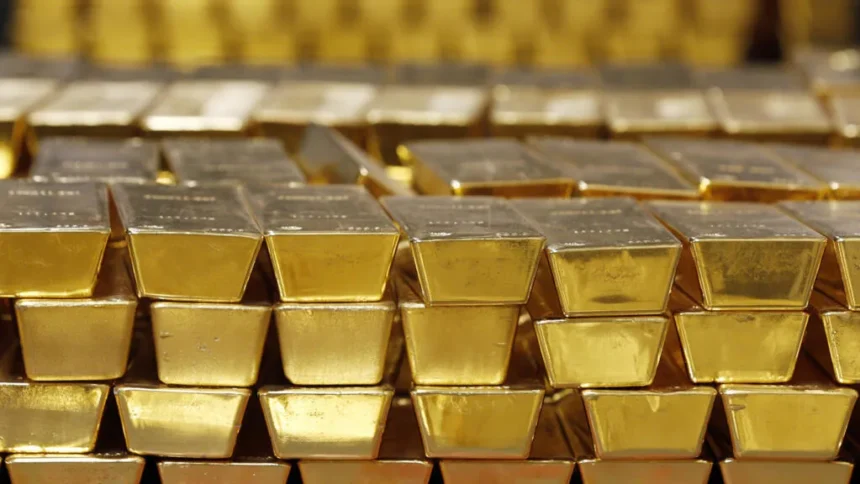
France has secured a massive €12.8 billion gain after relocating part of its gold reserves from the United States back to Europe, a move driven by rising gold prices and stricter bullion standards.
The Banque de France confirmed it upgraded 129 tonnes of gold which is about 5% of the country’s total holdings between July 2025 and January 2026. Instead of physically transporting the remaining gold stored in New York, the bank sold it and purchased newly certified bullion within Europe, keeping it in Paris.
The decision paid off. Through 26 separate transactions, France capitalized on a period when global gold prices were at historic highs, turning a technical upgrade into a multibillion-euro profit.
Today, all of France’s roughly 2,437 tonnes of gold, the fourth-largest reserve globally are held domestically in Paris. However, not all of it meets modern standards yet. Around 134 tonnes, consisting of older bars and coins, are still being upgraded, with a target completion date set for 2028.
The shift is part of a longer trend. France has been gradually replacing outdated gold formats since 2005, although much of its gold had already been moved out of foreign vaults decades earlier, between 1963 and 1966. This latest move marks the final step in consolidating reserves at home.
Officials insist the decision was practical, not political. Governor François Villeroy de Galhau said the strategy focused on efficiency, noting that it was easier to buy compliant gold in Europe than refine older stock stored abroad.
Still, the move has sparked wider debate across Europe. In Germany, which holds the world’s second-largest gold reserves, some economists are questioning whether their own assets should remain overseas.
The Deutsche Bundesbank currently stores about 1,236 tonnes of gold, roughly 37% of its total in the United States. Critics argue that shifting political and economic policies could pose risks.
“Trump is unpredictable and he does everything to generate revenue. That’s why our gold is no longer safe in the Fed’s vaults,” said Michael Jäger, who heads both the Association of German Taxpayers and the European Taxpayers Association.
France’s financial results highlight the benefits of its strategy. The central bank reported a net profit of €8.1 billion for 2025, a sharp turnaround from a €7.7 billion loss the previous year, boosted largely by the gold transactions.