
Global oil markets tumbled sharply after Donald Trump agreed to a temporary ceasefire with Iran, raising hopes that one of the world’s most critical oil routes could soon reopen.
US crude futures dropped more than 15% in after-hours trading, falling below $95 per barrel, one of the steepest single-day declines on record. Brent crude, the global benchmark, also slid nearly 14% to $94.68. The sudden drop reflects growing optimism that supply disruptions may ease if tensions cool in the Middle East.
At the same time, stock markets surged. Dow futures jumped over 1,000 points, while the S&P 500 and Nasdaq futures rose 2.4% and 3% respectively. Across Asia, investor confidence followed. Japan’s Nikkei 225 climbed 5.4%, South Korea’s Kospi soared 6.9%, and Hong Kong’s Hang Seng index gained 2.8%.
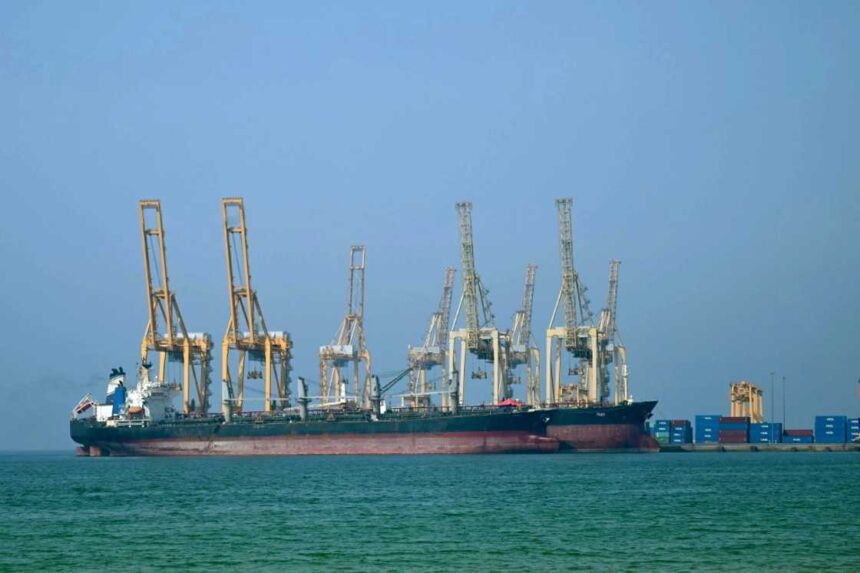
The shift in sentiment centers on the Strait of Hormuz, a narrow waterway responsible for moving about 20% of the world’s oil supply. Its effective closure during the conflict triggered what analysts describe as the largest oil supply shock ever recorded, disrupting between 12 million and 15 million barrels per day.
Still, uncertainty hangs over the ceasefire’s impact.
“The market has been eager to get good news but it remains to be seen if the Strait of Hormuz opens fully,” Bob McNally said. “That’s the whole ball of wax and so far Washington and Tehran seem to be talking past each other on that.”
Iran signaled caution despite the agreement. “This is not the end of the war but all military branches should follow the Supreme Leader order and cease their fire,” a statement broadcast on state media said.
For investors, the message was immediate. “Investors would like to get the Strait of Hormuz open and this conflict behind them,” Art Hogan noted, pointing to the sharp contrast between falling oil prices and rising equities.
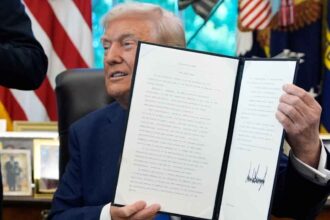
The ceasefire came just hours before Trump’s stated deadline for potential escalation. He described the deal as a starting point for negotiations, saying, “We received a 10 point proposal from Iran, and believe it is a workable basis on which to negotiate.”
Analysts suggest a temporary compromise could emerge, but nothing is guaranteed.
“Charging of a fee for safe transit through the Strait would be unacceptable to the US or its allies,” Mohit Kumar wrote, while adding that a short-term arrangement might be possible.
Energy experts also warn that the ceasefire has yet to clarify how quickly oil flows can return to normal. “The ceasefire hasn’t really clarified anything when it comes to the Strait,” Patrick De Haan said.
Meanwhile, a logistical challenge is already building. As many as 187 oil tankers remain stranded in the Gulf, waiting for safe passage. Their movement or continued delay will likely determine the next phase of price volatility.
Longer-term, the geopolitical stakes remain high. Analysts believe Iran has strengthened its influence over global energy markets, demonstrating its ability to disrupt supply on a massive scale.