
Oil prices climbed Tuesday while global stock markets delivered mixed results after fresh U.S. military strikes in Iran cast doubt on hopes for a quick diplomatic breakthrough between Washington and Tehran.
Investors had entered the week expecting progress toward a possible ceasefire agreement. Iranian officials, including the country’s foreign minister and chief negotiator, traveled to Doha for discussions with Qatar’s prime minister about a potential deal to end the conflict, according to an official familiar with the meetings.
The optimism faded after reports confirmed that U.S. forces launched strikes in southern Iran on Monday. American officials described the operations as defensive actions targeting missile launch sites and boats allegedly attempting to place naval mines.
The renewed military activity revived fears of prolonged instability across the Middle East, especially around the Strait of Hormuz — one of the world’s most critical oil shipping routes.
Japan’s Nikkei newspaper reported that negotiators were discussing a proposal to reopen the Strait of Hormuz roughly 30 days after any formal agreement to end hostilities. The route handles a major share of global oil exports, making it central to energy prices and inflation concerns worldwide.
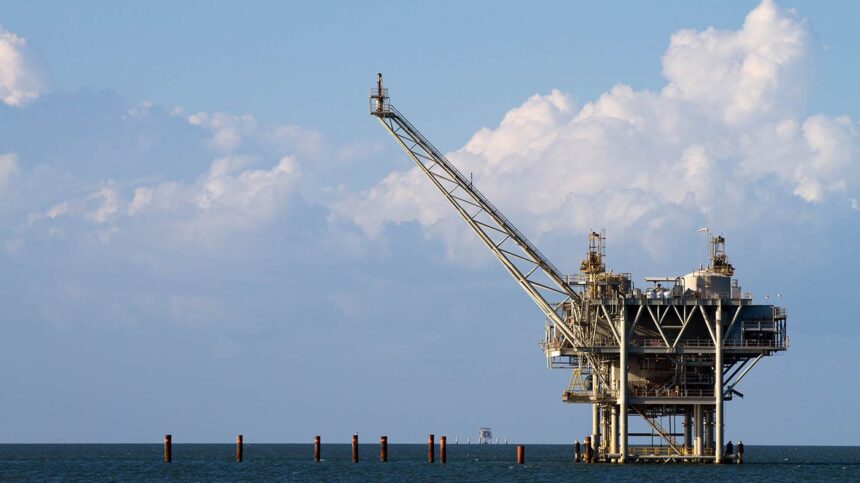
Brent crude futures rose more than 1% during early Asian trading, reaching $97.32 per barrel. U.S. West Texas Intermediate crude also moved higher compared with Monday’s final traded level, although it remained sharply below Friday’s close. Trading activity had been lighter due to the U.S. Memorial Day holiday.
Market analysts said traders remain uncertain because key details of any agreement are still unknown.
“I’m a bit sceptical… We keep being told there’s a deal that’s near, but what does the deal look like? That’s what’s really important. When’s the Strait of Hormuz going to open… There’s a lot we don’t know,” said Joseph Capurso, a strategist at Commonwealth Bank of Australia.
The uncertainty spread into equity markets. Asia-Pacific shares outside Japan advanced 0.8%, while Japan’s Nikkei index slipped 0.2%.
U.S. futures markets also showed caution. Nasdaq futures traded 0.9% higher after trimming earlier gains, while S&P 500 futures added 0.68%. European futures were mixed, with FTSE contracts rising and both DAX and EUROSTOXX 50 futures falling.
Analysts warned that an extended conflict could create broader economic pressure by driving up energy costs and increasing inflation risks.
“The market wants to believe that it’s all going to end soon, because the war not ending is quite bad for the world economy. The world economy’s had these buffers of running down inventories, but you can’t keep running down inventories,” said Capurso.
Currency markets reflected a cautious mood. The U.S. dollar held steady as investors sought safer assets amid geopolitical uncertainty. The euro slipped slightly to $1.1636, while the British pound eased to $1.3498. The dollar remained nearly unchanged against the Japanese yen.
Bond markets stabilized after heavy selling last week triggered concerns that higher oil prices could force central banks to maintain elevated interest rates for longer.
The yield on the U.S. two-year Treasury note remained near 4.06%, while the benchmark 10-year yield edged lower to 4.50%.
“We are likely to see periodic yield retracements on occasions when geopolitical risks subside, but inflation and fiscal risks are likely to be more sustained,” said Eric Robertsen, Standard Chartered’s head of global research and chief strategist.
“Commodity supply dislocations will take months to resolve, and fiscal support measures are likely to drive a sustained deterioration in sovereign balance sheets – which will also require increased borrowing in an environment of higher funding costs.”
Gold prices also slipped, with spot gold falling 0.5% to $4,545.90 an ounce as investors weighed the competing pressures of geopolitical risk and shifting bond yields.