
Iran has placed a $270 billion price tag on the damage it says was caused by recent US and Israeli military actions, setting a confrontational tone ahead of renewed diplomatic talks.
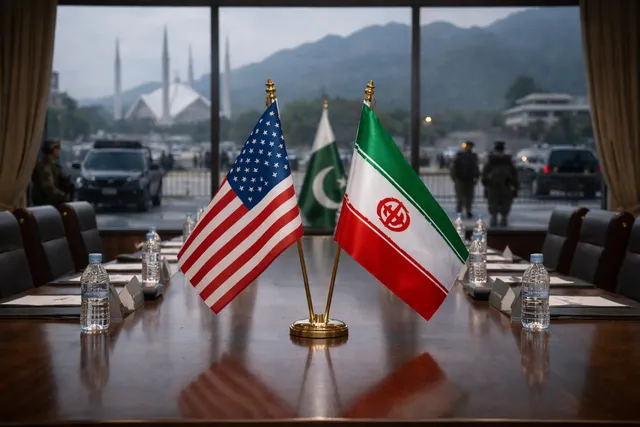
Officials in Tehran are pressing for compensation not only from Washington but also from five unnamed regional countries. Iran claims those nations allowed their territories to be used as launch points for attacks. The demand comes as indirect negotiations with the United States continue, with mediation efforts underway in Pakistan.
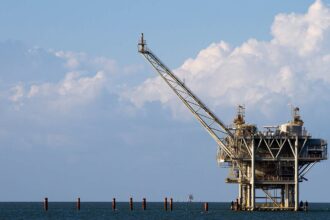
Government spokeswoman Fatemeh Mohajerani described the scale of destruction in stark terms. She said the estimate includes both direct and indirect losses since the conflict began on February 28. Critical infrastructure has taken repeated hits. Oil and gas facilities, steel plants, petrochemical sites, and military complexes are among the hardest affected. Rebuilding them could take years.
Civilian systems have not been spared. Transport networks, including bridges, railways, and ports, show heavy damage. Universities, power plants, and water desalination facilities have also been struck. Hospitals, schools, and residential areas have suffered widespread destruction, adding pressure on an already strained government.
Tehran is now floating a controversial proposal tied to the Strait of Hormuz. Officials suggest a new protocol that could impose fees on ships passing through the strategic waterway, framing it as a mechanism to recover war-related losses.
At home, the financial reality is harsh. Mohajerani admitted that “existing economic realities” mean the state cannot compensate citizens whose homes were damaged or destroyed. That gap has deepened public frustration.
The aviation sector offers another window into the crisis. Maghsoud Asadi Samani, secretary of the Association of Iranian Airlines, said 60 civilian aircraft are no longer operational, including 20 completely destroyed. Iran now relies on roughly 160 aging passenger planes, many kept flying despite limited access to spare parts due to long-standing US sanctions.
Airlines also took a financial hit during Nowruz, the Persian New Year period that usually brings strong travel demand. Samani said losses exceeded 300 trillion rials, or about $190 million, within just 40 days of conflict.
Airports across major cities including Tehran, Tabriz, Urmia, and Khorramabad have sustained damage to runways, control towers, and hangars. These disruptions have further weakened domestic and international connectivity.
Despite the mounting losses, Iran’s political leadership is not signaling compromise. Ebrahim Rezaei, a senior parliamentary figure, rejected extending a recently announced two-week ceasefire. He argued that any pause would allow opposing forces to regroup.
“They must either recognise Iran’s rights, including our control over the Strait of Hormuz, or return to war,” he wrote.
Military spending may rise even as the economy struggles. Iran allocated nearly $8 billion to defense in 2024, according to the Stockholm International Peace Research Institute. Officials have pledged to triple that figure following earlier missile exchanges with Israel. At the same time, years of sanctions, mismanagement, and corruption have tightened the national budget.
The economic strain has intensified due to a near-total internet shutdown now entering its seventh week. More than 90 million people remain largely cut off from the global web. Businesses have reported layoffs and lost income as digital services grind to a halt.
Afshin Kolahi, a business leader, warned that the shutdown is costing up to $80 million per day. He used vivid comparisons to underline the scale of loss.
“We are losing [the equivalent of] four B1 bridges every day. We are losing two medium-capacity power plants every day, and we are doing this ourselves,” he said.
The government has distanced itself from responsibility, attributing the blackout to decisions made by the Supreme National Security Council. Meanwhile, authorities are moving toward a tiered internet system. Selected businesses may gain limited global access, while most citizens remain restricted to a controlled domestic network.
A premium service called “Internet Pro” has emerged, offering less filtered access at a higher cost. Some users say they have paid but are still waiting for activation.
Public frustration is visible even on state-linked platforms. Calls for “internet freedom” dominate comment sections. Authorities have tightened control further, ordering a major tech outlet to remove a live counter tracking the duration of the blackout.
In the background, a black market for virtual private networks continues to thrive, offering one of the few remaining channels to the outside world.