

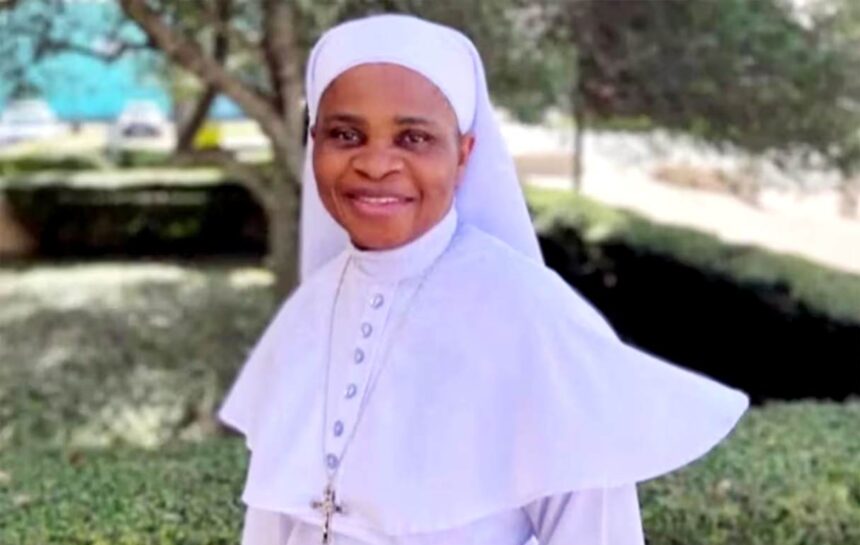

MCALLEN, Texas — Federal immigration officers detained a Catholic nun as she walked to Sunday Mass near the U.S.-Mexico border on June 28, prompting public outcry and intervention from members of Congress.
Sister Leticia Ugboaja, 56, spoke publicly on Thursday at Our Lady of Sorrows Church in McAllen for the first time since her arrest. She said two armed U.S. Immigration and Customs Enforcement (ICE) officers stopped her while she wore her religious habit, carrying only a cellphone and rosary.
”At that moment, I did not understand what was going on, what was happening to me,” Ugboaja said.
Ugboaja asked the officers to allow her to attend church, but they turned down her request.
”For me, a nun, not to go to Mass on Sunday, not to receive Communion, it was very, very heartbreaking for me,” she said.
Ugboaja is a registered nurse at South Texas Health System and a member of the Daughters of Mary Mother of Mercy. She previously worked for ten years as a certified nursing assistant in Edinburg and volunteered at Our Lady of Sorrows Church.
An immigration judge denied Ugboaja’s asylum claim in 2019, but granted her legal protection from removal to Nigeria because she faced a strong likelihood of torture there. Her attorney, Carlos M. Garcia, stated she has followed all legal requirements and holds valid permission to work in the United States.
Garcia said ICE provided little explanation during her arrest, but federal officials planned to send her to a third country. The Department of Homeland Security (DHS) uses third-country removal agreements to handle large court backlogs. Human rights groups and legal experts continue to challenge these policies in court.
Local church leaders posted details about the arrest on social media, drawing nationwide attention and Congressional intervention. ICE released Ugboaja several hours after taking her into custody.
The Catholic nun has a mandatory check-in appointment with ICE on Tuesday. She said she decided to speak publicly to help protect other immigrants who follow the law.
”There are many others in this same situation, people who have been given some form of protection under our laws, who have followed every rule asked of them, and who still live with uncertainty,” Ugboaja said.
She added that receiving help “does not mean I can stay quiet about what happened to me, or about what is still happening to others.”
Neither DHS nor ICE responded to requests for comment.