
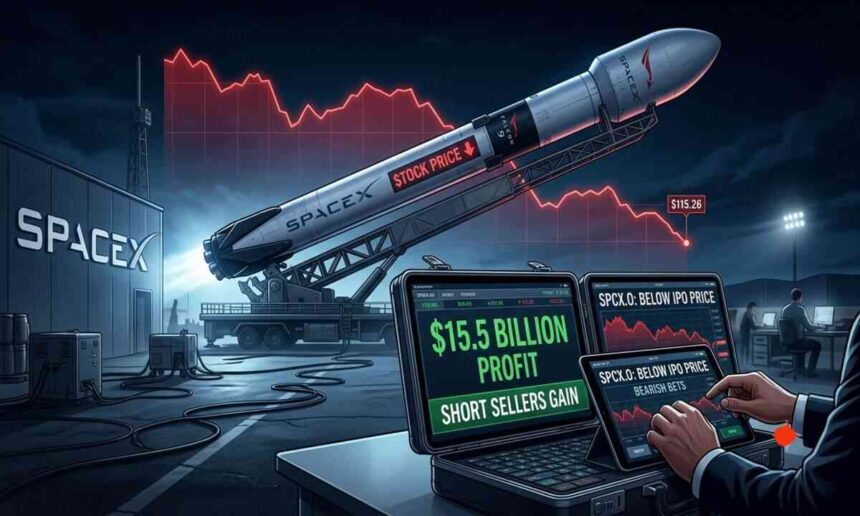
NEW YORK — Short sellers betting against Elon Musk’s rocket and artificial intelligence company SpaceX have pulled in an estimated $15.5 billion in paper profits since the firm’s mid-June initial public offering (IPO).
The sharp turnaround came after SpaceX shares fell to a low of $115.26 on Wednesday. The price is now well below the company’s initial IPO tag of $135 and far off its post-IPO peak of $225.64.
Short selling happens when investors borrow shares to sell them right away, expecting the price to drop. They plan to buy the shares back cheaper later and pocket the difference as profit.
Data from analytics firm Ortex Technologies shows that traders are actively expanding their positions rather than cashing in on their current gains.
”There is no sign of short sellers taking profits on SpaceX,” Ortex co-founder Peter Hillerberg said.
”If anything they are leaning in harder,” Hillerberg said.
Roughly 360 million SpaceX shares were out on loan through Tuesday. That represents about 56% of the company’s free float, or publicly available stock.
SpaceX did not immediately respond to a request for comment.
SpaceX CEO Elon Musk pushed back against the market bets in a public warning.
”The survival probability of firms who maintain a significant short position in SpaceX over time is very low,” SpaceX CEO Elon Musk wrote in a post on X on Friday.
High valuations make SpaceX a primary target for skeptics who doubt its price tag. Even so, heavy interest from regular and institutional buyers makes shorting the stock dangerous, especially with Musk’s long history of publicly fighting short sellers.
Market concerns are also tied to massive debt-funded spending on artificial intelligence across Musk’s corporate network. Electric vehicle maker Tesla recently reported negative free cash flow for the first time in over two years as it bumped up spending on robotaxis, battery production, and AI hardware.