

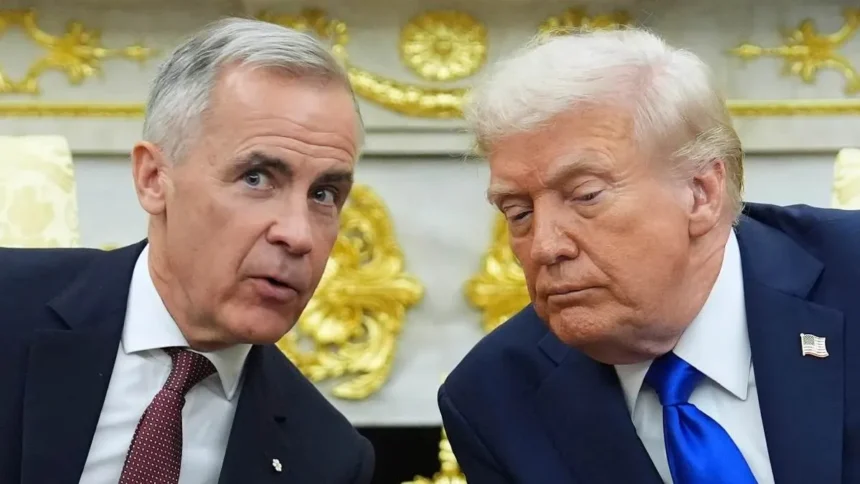
Canada will place new tariffs on American imports starting Sept. 8 in direct response to 50 percent levies imposed by the United States, Prime Minister Mark Carney said Saturday morning.
Speaking at a news conference, Carney said the government plans to match the new U.S. duties dollar for dollar to shield Canadian businesses, farmers, workers, and families.
The retaliatory action follows a breakdown in cross-border negotiations on Friday evening. Carney said he ordered Canadian negotiators to leave the bargaining table just hours before the U.S. measures were scheduled to kick in at midnight. The prime minister stated that the decision came after U.S. officials put forward new terms late in the process.
The fresh American duties target more than $20 billion in imports from Canada. A wide variety of products fall under the new 50 percent penalty, including wine, cement, and hockey sticks.
Carney noted that specific operational details regarding Canada’s response will be released in the coming days. However, he confirmed the counter-tariffs will apply to goods such as steel, dairy products, electronics, pulp and paper, appliances, and agricultural equipment.
While announcing the retaliatory steps, Carney stressed that his administration is taking action reluctantly. He acknowledged that the trade fight will raise consumer costs and limit choices for people across Canada. He added that the measures will also hurt uninvolved U.S. states and companies, while blocking cooperative efforts between both nations.
”But at the same time, we take this step confident that it is in the best interest of Canada,” Carney said.
The Trump administration pushed back against Ottawa’s version of how the talks collapsed. U.S. Trade Representative Jamieson Greer rejected the assertion in a social media statement, saying Washington had offered Canada top-tier access to the American market.
Greer said the proposed agreement fell apart because Canadian officials introduced new demands and backed away from earlier promises, calling the breakdown a missed opportunity for both economies.