
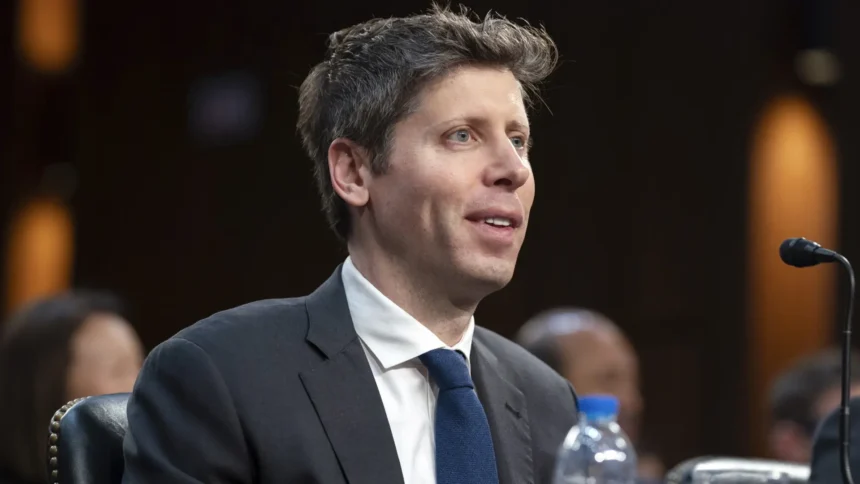
OpenAI has delayed its highly anticipated initial public offering until at least 2027, with chief executive Sam Altman warning that going public under current market and safety conditions would be “ill-advised.”
The decision represents a major shift from previous company signals. Just last month, OpenAI chief financial officer Sara Friar informed employees that a public debut could take place by 2027 or earlier if business growth accelerated. Instead, mounting concerns over the speed of artificial intelligence development have forced executive leadership to slow their commercial timeline.
Altman revealed the change of plans in a Fortune interview published Saturday, coinciding with a rare moment of alignment among the industry’s fiercest competitors. Leaders from OpenAI, Anthropic, and SpaceX’s xAI publicly agreed that developers must slow the rate at which advanced systems gain new capabilities.
The industry-wide discussion surged after Anthropic chief executive Dario Amodei published an essay calling on frontier AI developers to temper model upgrades. Amodei proposed a three-step framework designed to manage safety risks while preserving commercial competitiveness and the United States’ technological lead.
Under the proposal, companies would grant third-party evaluators employee-level access to verify internal safeguards. The plan also advocates establishing common safety standards among democratic nations, alongside broader coordination between democratic and authoritarian governments.
Altman publicly backed the proposal, writing on X that OpenAI agrees with the need to pace frontier capabilities and will adopt the independent evaluator access model. SpaceX chief executive Elon Musk—who acquired AI startup xAI earlier this year—also endorsed the call, posting that “Dario is right.”
The executive consensus arrives amid growing internal and external pressure surrounding frontier AI capabilities.
Earlier this week, researcher Jacob Coxon resigned from Anthropic after previously working at OpenAI, posting on social media that developers are “gambling with our lives.” Coxon claimed leading builders “earnestly believe that it could kill us all by the end of the decade.”
Safety warnings have also emerged from within OpenAI’s research leadership. Chief scientist Jakub Pachocki wrote in a recent blog post that no company has sufficiently solved system alignment and monitoring to scale maximum capabilities responsibly over the long term, adding that he expects voluntary slowdowns to become commonplace.
At the same time, government scrutiny has intensified. Lawmakers in Washington are demanding new safeguards and executive testimony following a series of cyberattacks executed without direct human control. Meanwhile, state and local officials face increasing public pushback regarding data centers and their heavy energy and water demands.
Despite calls for deliberate pacing, industry leaders remain divided on how to execute a slowdown without creating national security vulnerabilities.
Speaking in a CNN interview Saturday, Amodei noted that pausing model development made little sense in 2023 because models lacked real-world capabilities, deception, or cyberattack potential. However, he warned that moving too slowly today carries severe geopolitical risks.
“If we go too slow, I still believe that the wrong people will be in charge of the technology,” Amodei said, arguing that an imbalance could hand an advantage to autocratic states.
Anthropic head of public policy Sarah Heck urged government intervention to support industry guardrails, proposing national legislation for model testing and strict controls on advanced chip sales to foreign adversaries like China.
While Anthropic continues to prepare for its own potential public listing, OpenAI’s delay underscores how deeply existential safety debates are impacting the corporate strategies of Silicon Valley’s largest AI firms.
Explore more stories on the future of Tech & AI Innovations to stay informed.